Telecom & Broadband Intelligence

Welcome to the Mercury Z Blog, your go-to resource for navigating the rapidly evolving landscape of telecommunications and network infrastructure. In an industry where connectivity is the backbone of global progress, staying ahead requires more than just keeping up; it requires strategic foresight.

Here, our engineers, project managers, and industry experts share deep dives into fiber deployment, network security, and the latest in broadband innovation. Whether you are scaling a nationwide rollout or optimizing a data center, our goal is to provide the technical clarity and operational intelligence you need to lead your organization to unrealized levels of performance.

The Traveling Tech Life: Earn More in 4 Years Than a Decade at a Local Job

Most technicians underestimate what they’re worth — not because the market is unfair, but because they’ve never done the math on traveling tech work. Per diem alone adds $18,000–$36,000 in tax-free annual income before you factor in higher base rates. Over four years, traveling technicians in fiber, data centers, and network work routinely out-earn their local peers by $80,000 to $240,000. Mercury Z maintains a national Virtual Bench of pre-vetted traveling technicians ready to match to high-value projects across the country.
Read More »

Mercury Z: Building America’s Starlink Integration Workforce

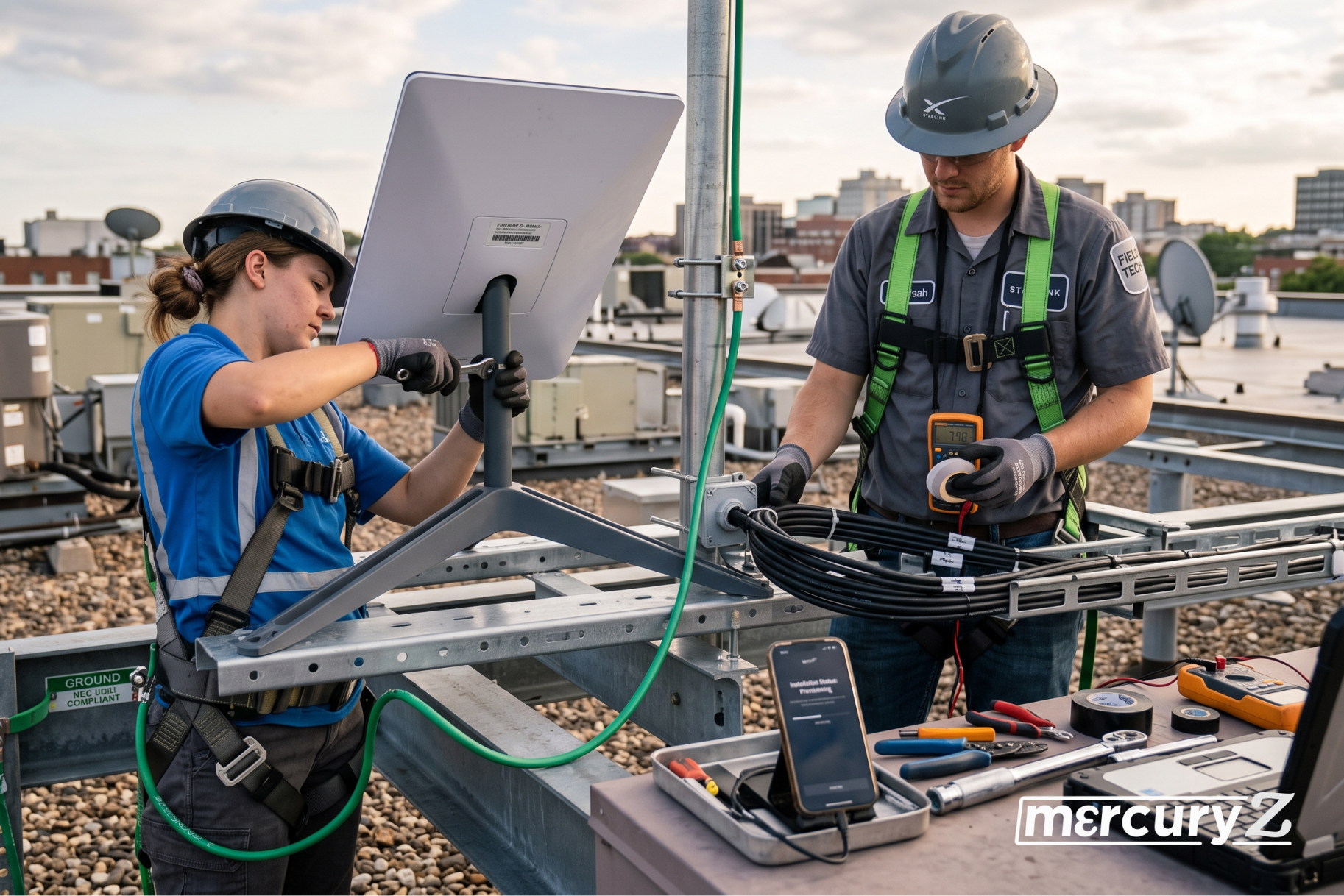
SpaceX is pushing Starlink Business V3 hardware upgrades across enterprise and carrier accounts throughout 2026. Every deployment needs a certified technician who can remount the dish, reconfigure the SD-WAN, and validate the network before leaving the site. Most companies underestimate what that actually requires. Physical installation is one track. Enterprise network integration — CGNAT bypass, Peplink SD-WAN configuration, Meraki failover, VLAN segmentation — is another, and it demands CCNA-level expertise that is genuinely hard to find at scale. Mercury Z has built a two-track certification program and a national virtual bench to cover both. If your organization has Starlink deployments on the calendar, the workforce gap is real and the timeline is now.

Read More »

The Data Center Workforce Shortage: Why the Skills Gap Is Your Opportunity

Hyperscalers are breaking ground faster than the industry can staff. If you’re a qualified technician — or a staffing operation that can deploy them — this is the best labor market you’ll see in a decade. $200B+ In U.S. data center construction underway or planned 24-48 hrs From request to verified bench match 10 Active markets in Mercury Z coverage 5 Data center specialties on the verified bench 5 GCs Top national GCs competing for the same subcontractors Sources: U.S. Department of Energy; McKinsey Global Institute; Mercury Z operational data The Scale of the Problem Over $200 billion in data center construction is underway or

Read More »
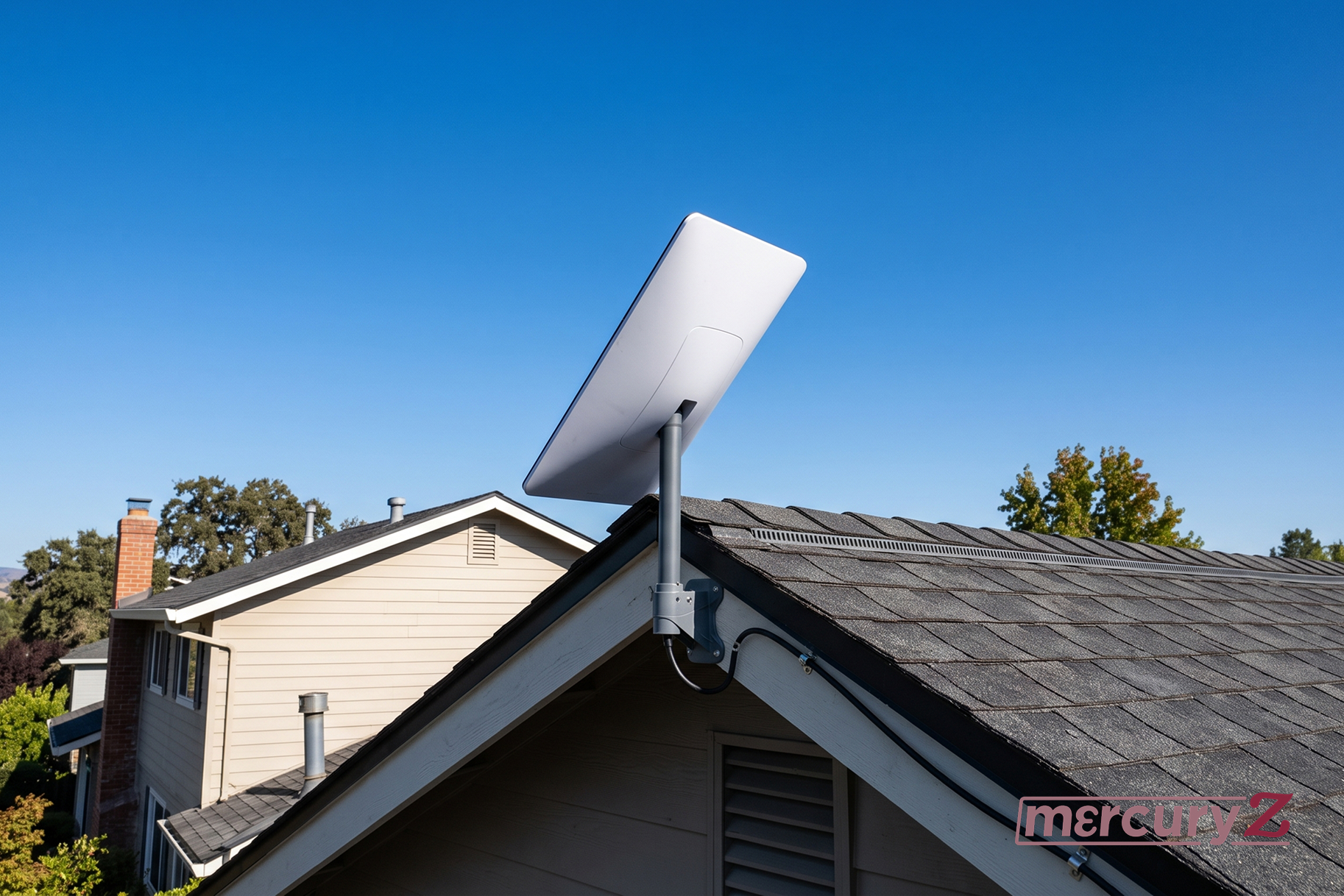
Starlink Business flat high-performance dish mounted on commercial building rooftop

Why Starlink Business Is Changing Commercial Connectivity — And Why Certified Installers Are in Demand

There’s a shift happening in commercial connectivity that most IT teams are still catching up to. Starlink Business — SpaceX’s enterprise-grade satellite internet service — is no longer just a fallback option for rural sites. It’s becoming the primary connectivity layer for construction sites, stadium events, carrier deployments, and enterprise campuses where laying fiber isn’t fast enough or economically viable. And as the deployments scale up, one thing is becoming clear: the bottleneck isn’t equipment. It’s certified installers. Starlink Business — By the Numbers 500 Mbps Peak download speed (Business tier) 20–40ms Latency — enterprise-viable satellite 100+ Countries with Starlink Business deployments 5,000+ Concurrent users

Read More »

Traveling Tech Work: The Financial Case No One Is Talking About

Most tech career conversations focus on salary and benefits. What rarely gets discussed is what traveling field tech work actually pays — the full picture. When you factor in tax-free per diem, overtime exposure, and the density of high-value projects in secondary markets, a traveling tech position often outperforms a comparably-titled fixed-location job by a margin that would surprise most people. The per diem alone — structured properly under IRS accountable plan rules — can add the equivalent of $30,000 in additional salary without touching your taxable income. Add overtime on data center builds and carrier ramp projects, and the math changes substantially. This is the financial case no one explains clearly.

Read More »

The Data Center Boom: Why Skilled Field Techs Are the Most Valuable People in the Room

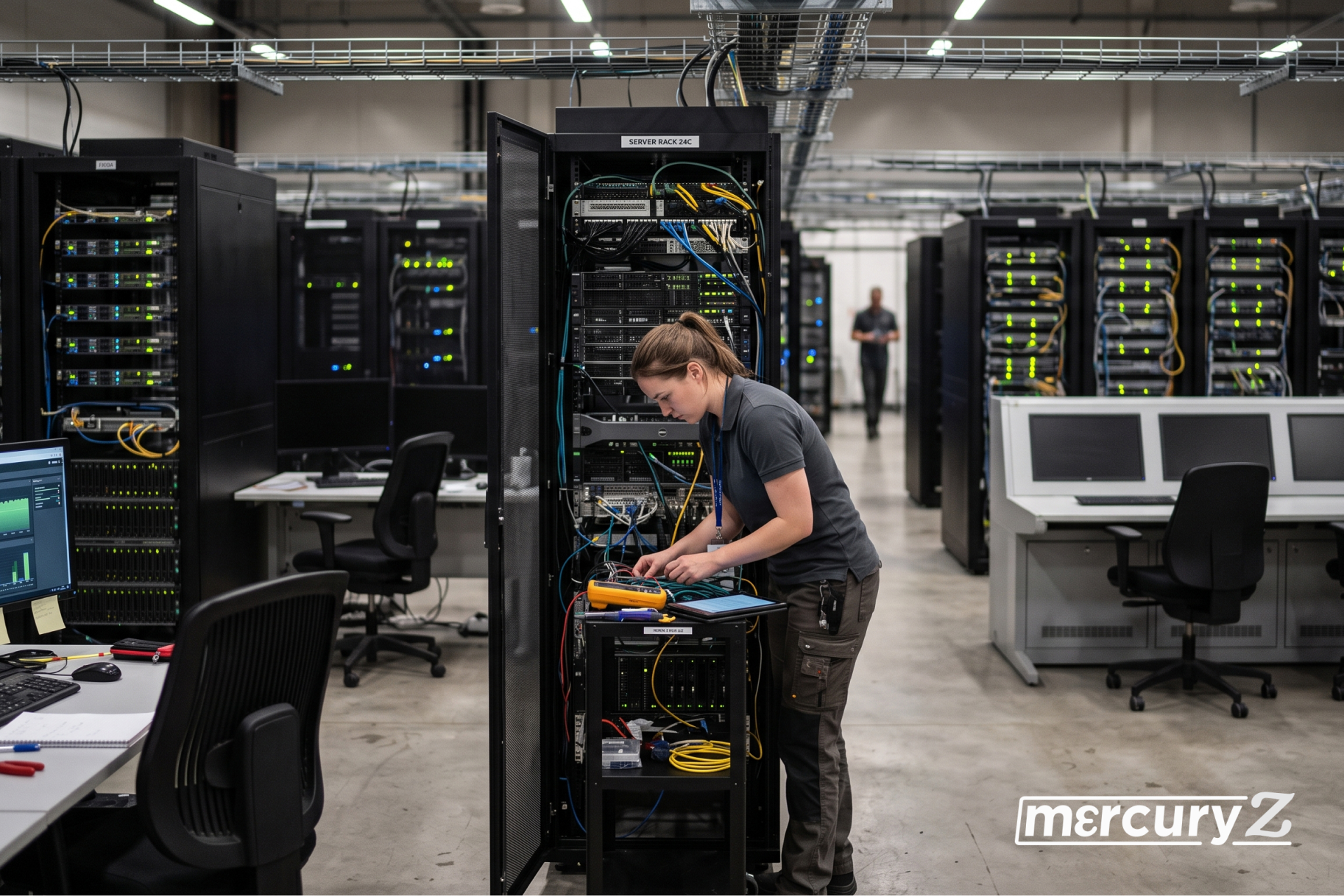
Everyone is talking about the AI-driven data center buildout. Hyperscalers are announcing billion-dollar campuses. Secondary markets are suddenly on the map. Real estate developers are converting industrial sites overnight. What doesn’t get talked about nearly as much: none of it gets built without the people on the floor. Rack-and-stack crews. Cable technicians. Low-voltage electricians. Network engineers who can terminate a fiber run, configure a switch, and hand a clean site to the cloud team by end of shift. These are the professionals making the AI infrastructure revolution physically real and right now, they’re in higher demand than the market has seen in years. $40B+ New

Read More »

When the Local Bench Runs Dry: The Case for Traveling Technical Talent

Every large infrastructure build eventually hits the same constraint: not enough qualified hands within driving distance to execute the schedule. Data centers, fiber networks, substations, and advanced manufacturing facilities are landing in markets that were never designed to staff them. When that happens, the question isn’t whether you’ll pay a premium for labor — it’s whether you’ll pay a predictable, bounded one to bring skilled people in, or an open-ended one as your calendar slides. The operators who finish on time have stopped treating traveling technicians as a last resort. They treat them as a planned capacity layer — deployed deliberately, managed professionally, and demobilized

Read More »

Equipment Architecture and Optical Node Design

As optical transport networks evolve to support AI workloads, hyperscale data centers, and high-capacity cloud infrastructure, equipment architecture and node design have become critical components of network performance. Modern optical nodes must deliver flexibility, scalability, and resiliency while supporting rapid bandwidth expansion. In 2026, operators are moving away from rigid point-to-point systems and adopting programmable, software-driven optical architectures that can dynamically adapt to changing traffic demands. Equipment architecture influences everything from wavelength routing and network recovery to automation and operational efficiency. Poorly designed nodes can create bottlenecks, limit scalability, and increase downtime. By implementing flexible optical node design, organizations can simplify network expansion, improve service

Read More »

Optical Layer and Transport Engineering

Optical layer and transport engineering form the technical core of high-capacity fiber networks. As organizations deploy 100G, 400G, and emerging 800G wavelengths, maintaining signal integrity across metro and long-haul spans becomes increasingly complex. High-speed optical transmission is sensitive to attenuation, dispersion, noise accumulation, and nonlinear effects. Without precise engineering, networks may experience degraded performance, reduced reach, and increased error rates. In 2026, optical transport infrastructure must support AI clusters, hyperscale data center interconnects, and low-latency cloud services. These applications demand consistent, carrier-grade performance across long distances. Optical layer engineering focuses on optimizing signal quality, managing impairments, and ensuring that wavelengths travel efficiently across fiber infrastructure.

Read More »

Optical Network Design and Planning

Optical network design plays a critical role in ensuring high-performance, scalable, and resilient transport infrastructure. As bandwidth demand continues to grow in 2026, operators must move beyond basic connectivity and adopt structured planning methodologies that optimize fiber routes, wavelength allocation, and spectral efficiency. Whether supporting hyperscale data centers, AI workloads, or long-haul backbone networks, effective optical design directly impacts latency, reliability, and cost efficiency. Modern networks must support dynamic traffic patterns, multi-terabit capacity, and low-latency applications. Poorly designed routes, inefficient spectrum allocation, and lack of redundancy can create performance bottlenecks and increase operational risk. Strategic optical network design ensures that every fiber path is optimized

Read More »

Capacity Planning and Optical Network Architecture

The rapid expansion of AI-driven applications, cloud computing, and high-performance data center interconnects is transforming how network operators approach capacity planning. Traffic growth is no longer linear. Instead, organizations are experiencing exponential increases in bandwidth demand driven by hyperscale data centers, 5G rollout, edge computing, and real-time analytics. In this environment, reactive network upgrades are costly and inefficient. Strategic capacity planning and optical network architecture are essential for ensuring scalability, optimizing existing infrastructure, and supporting long-term growth. In 2026, network operators must balance two priorities. They must maximize utilization of existing fiber assets while preparing for significant increases in bandwidth requirements. This requires a data-driven

Read More »

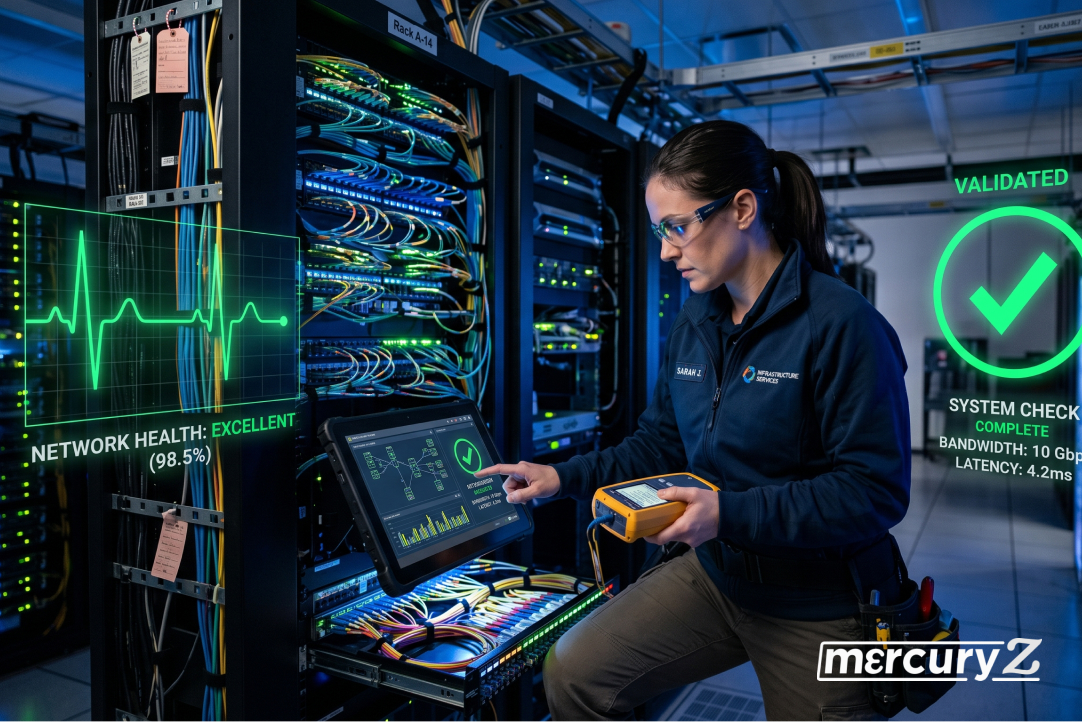
Fiber Auditing and Network Health Validation

As telecom, hyperscale, and enterprise networks continue to expand, maintaining accuracy between physical infrastructure and digital records has become increasingly complex. Over time, networks evolve through upgrades, mergers, maintenance activities, and emergency restorations. These changes often create inconsistencies between documentation systems and the actual fiber plant. This condition, commonly referred to as network drift, creates operational inefficiencies, delays provisioning, and leads to underutilized infrastructure. In 2026, this challenge is even more critical. The growth of AI workloads, hyperscale data centers, and high-capacity optical transport requires precise visibility into fiber infrastructure. Without accurate network intelligence, organizations risk overbuilding capacity, misallocating resources, and increasing operational costs. Fiber

Read More »