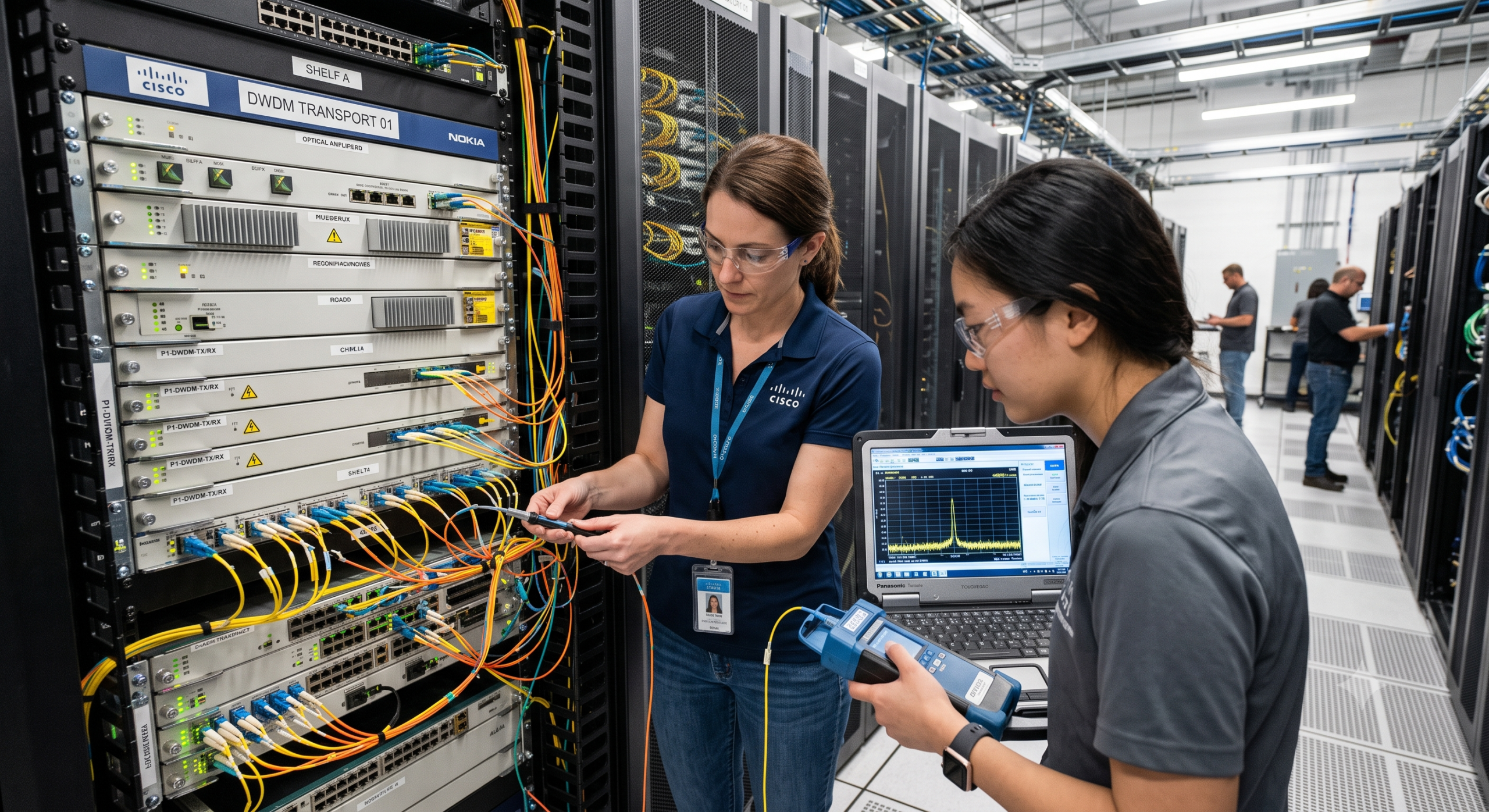
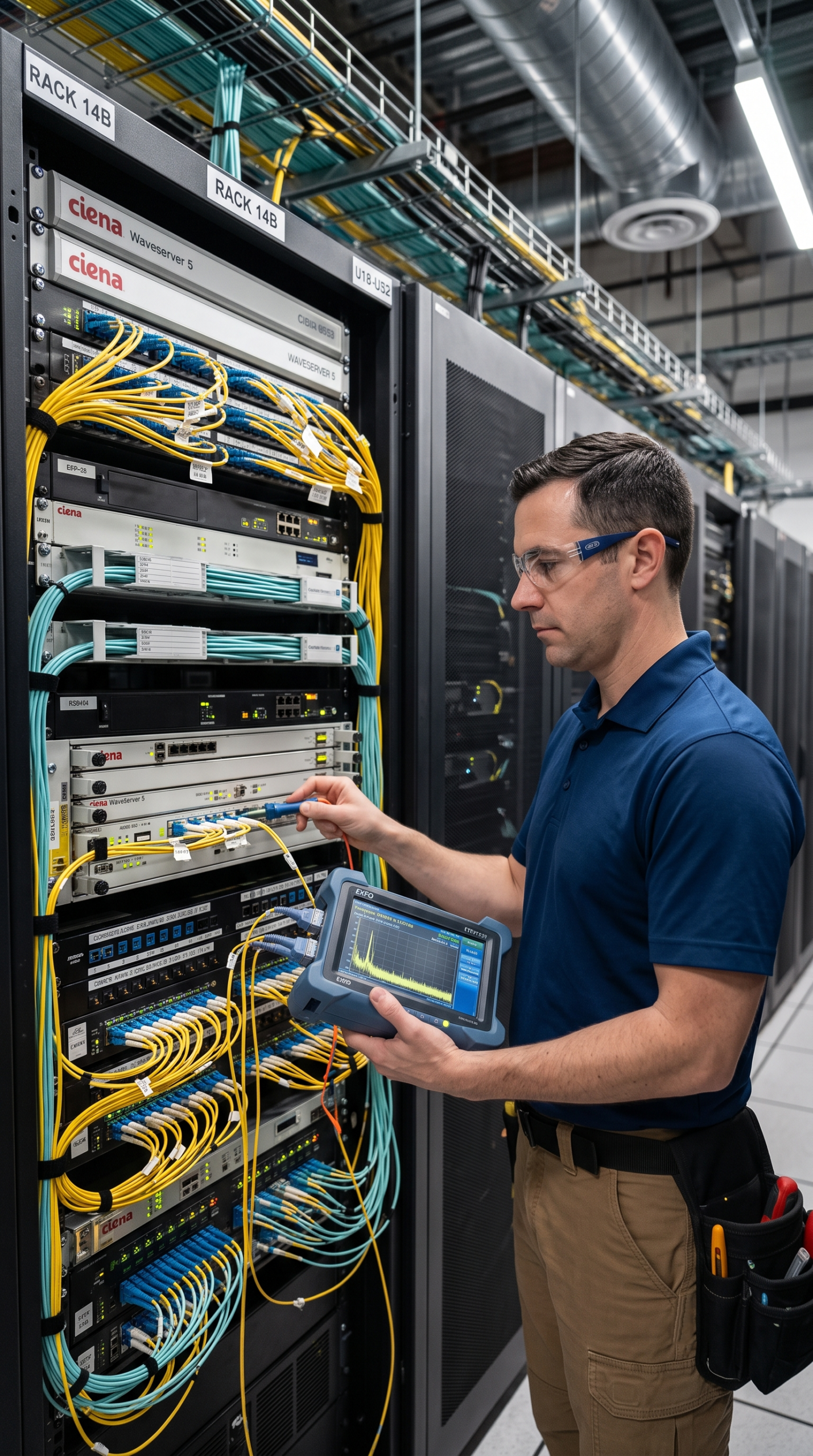
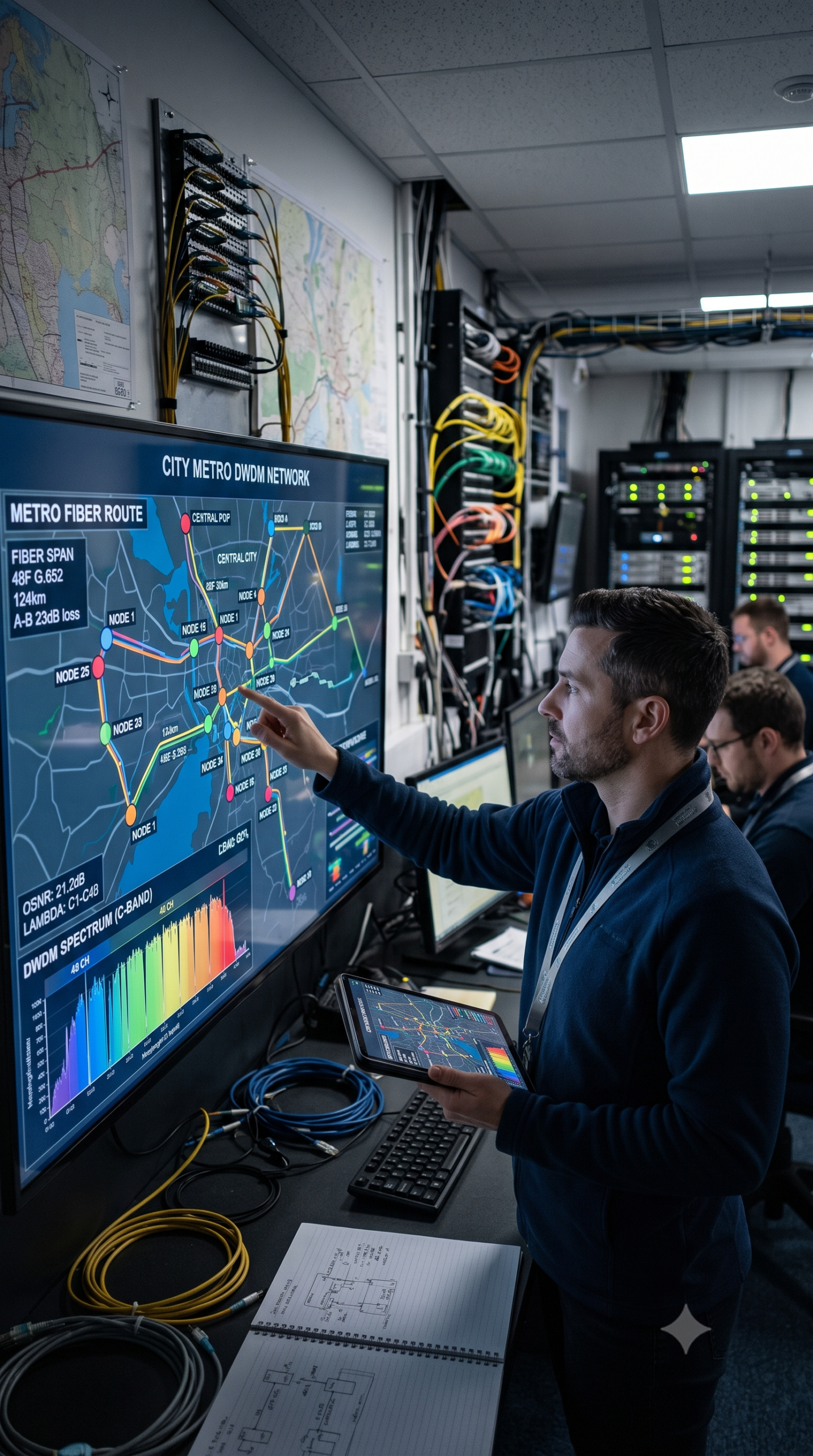
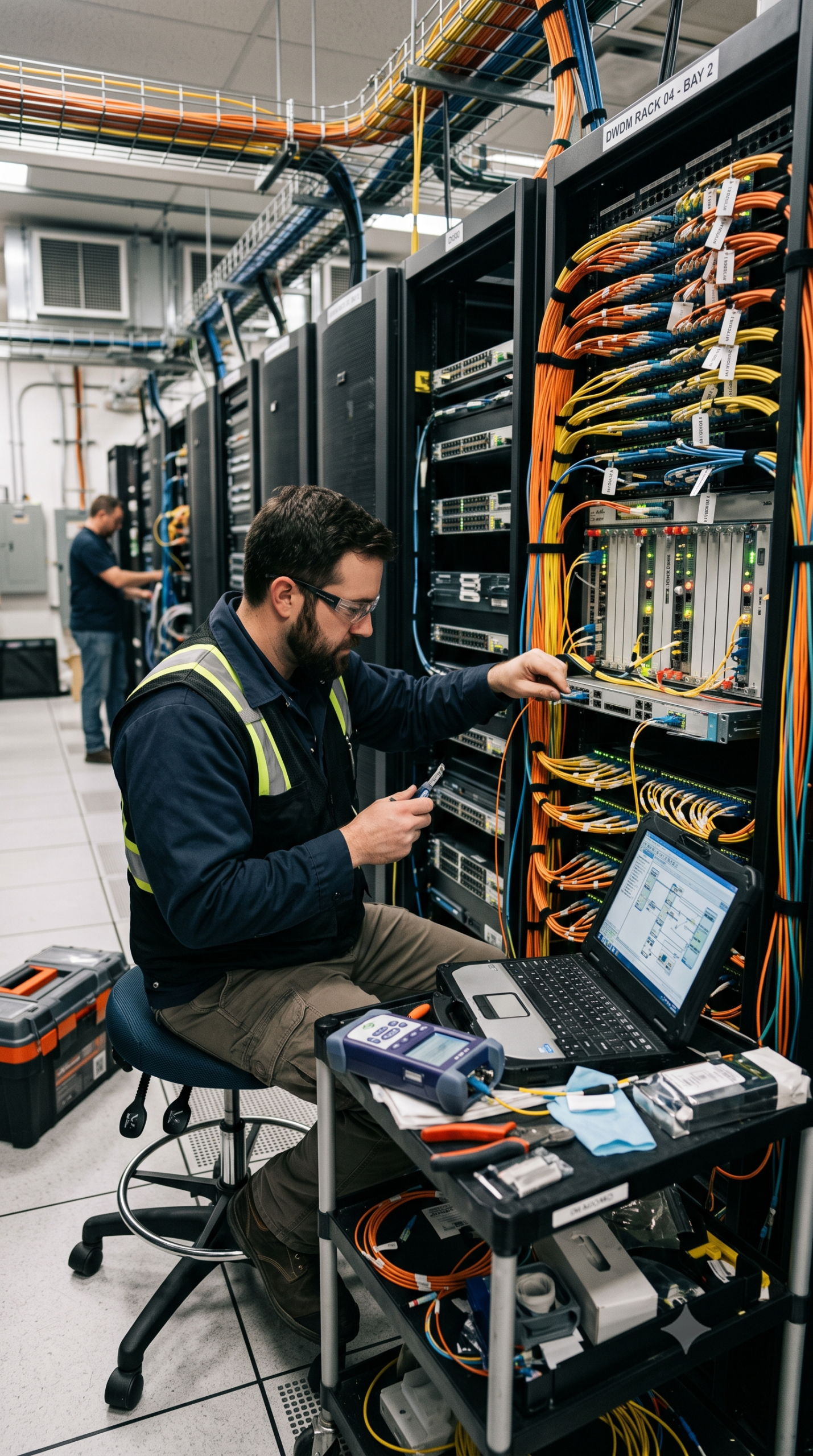
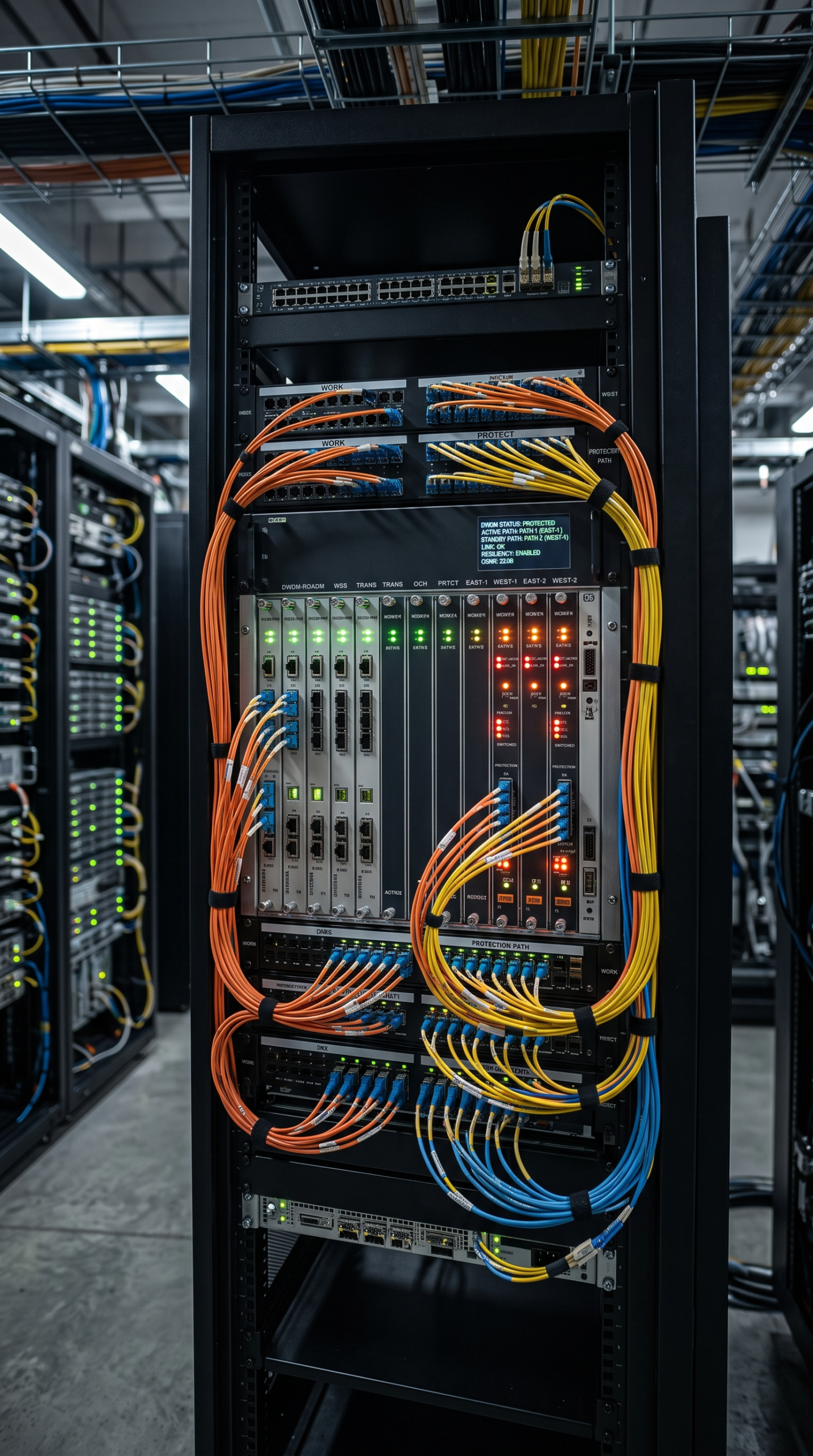
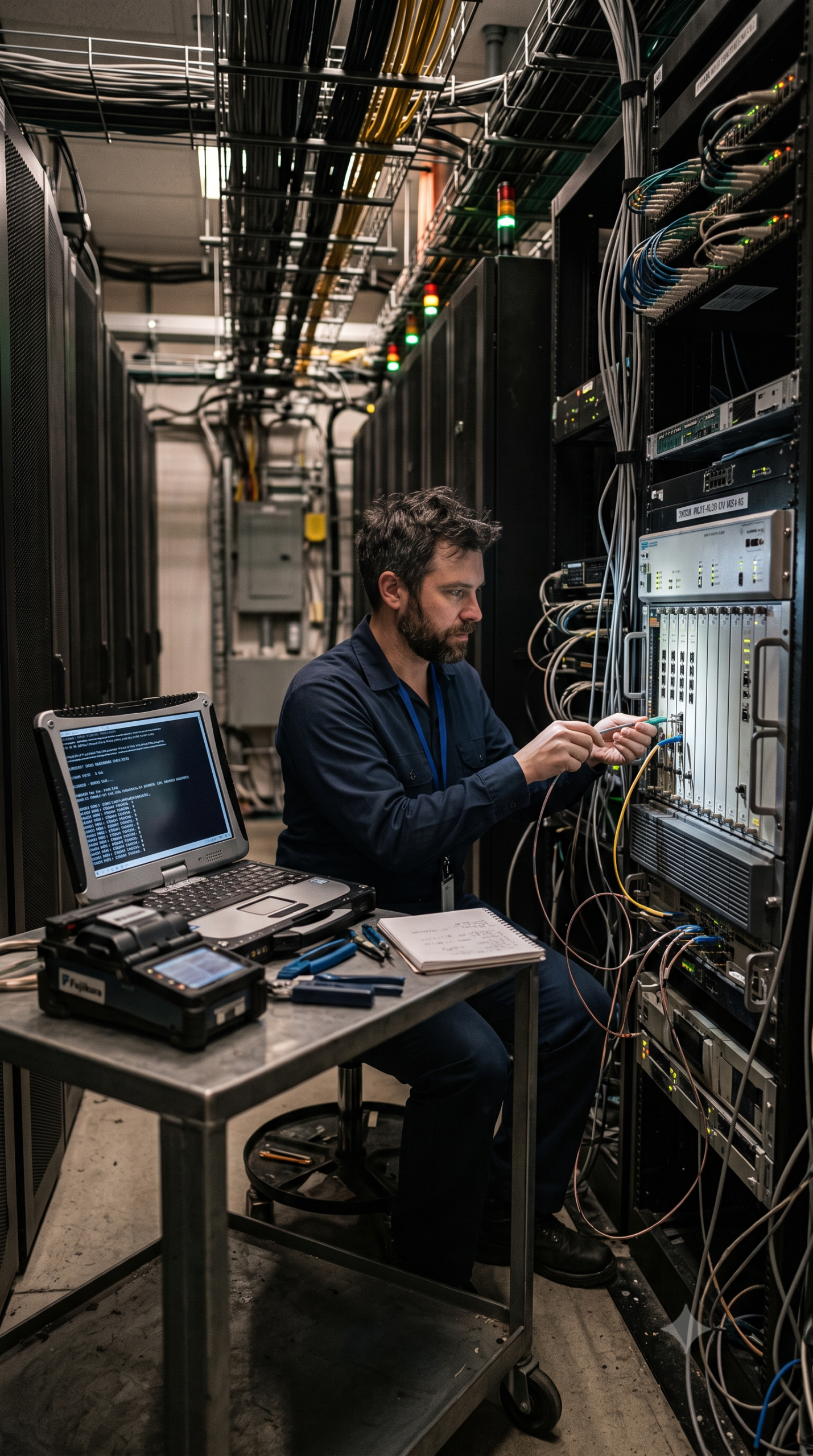
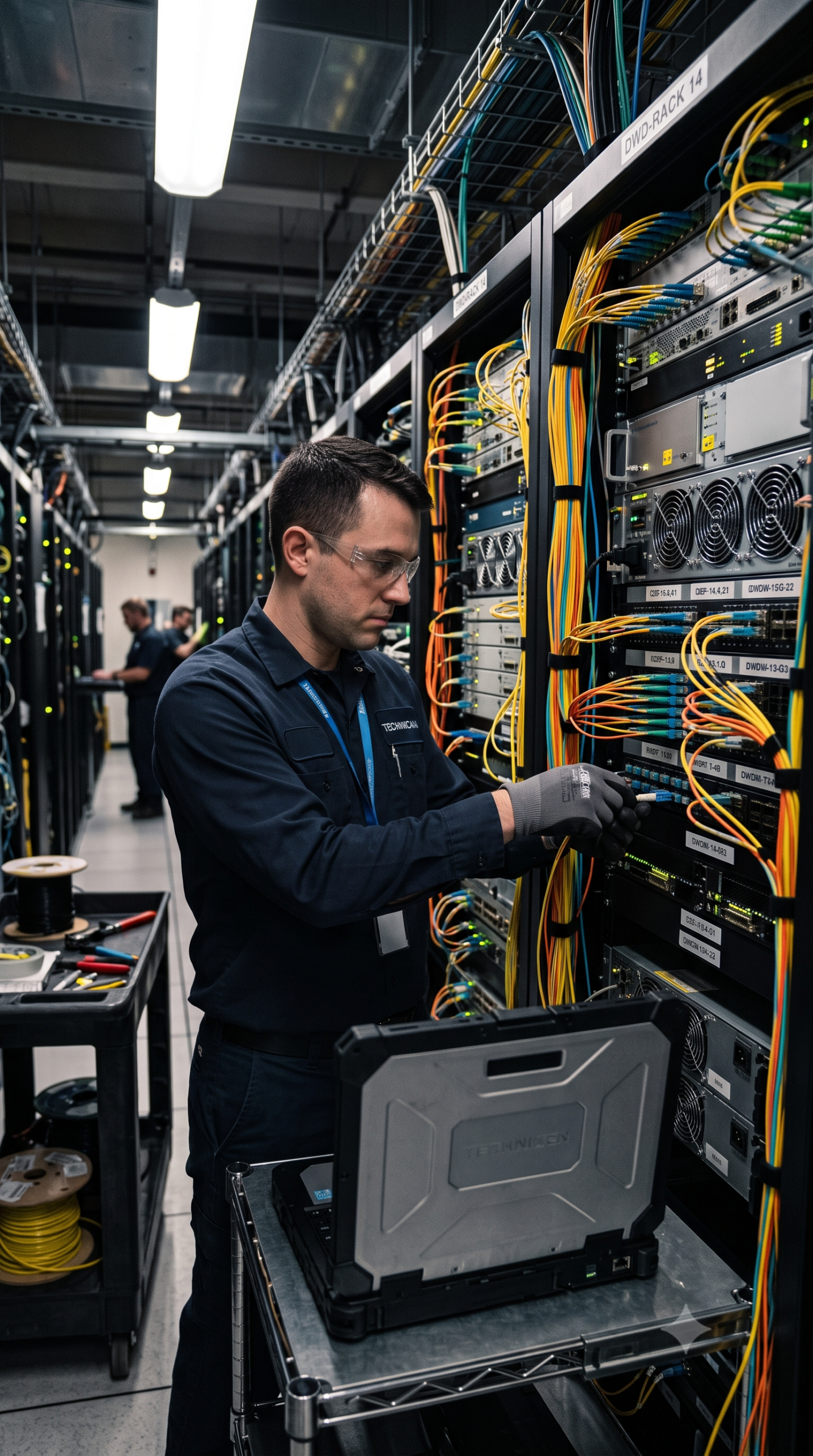
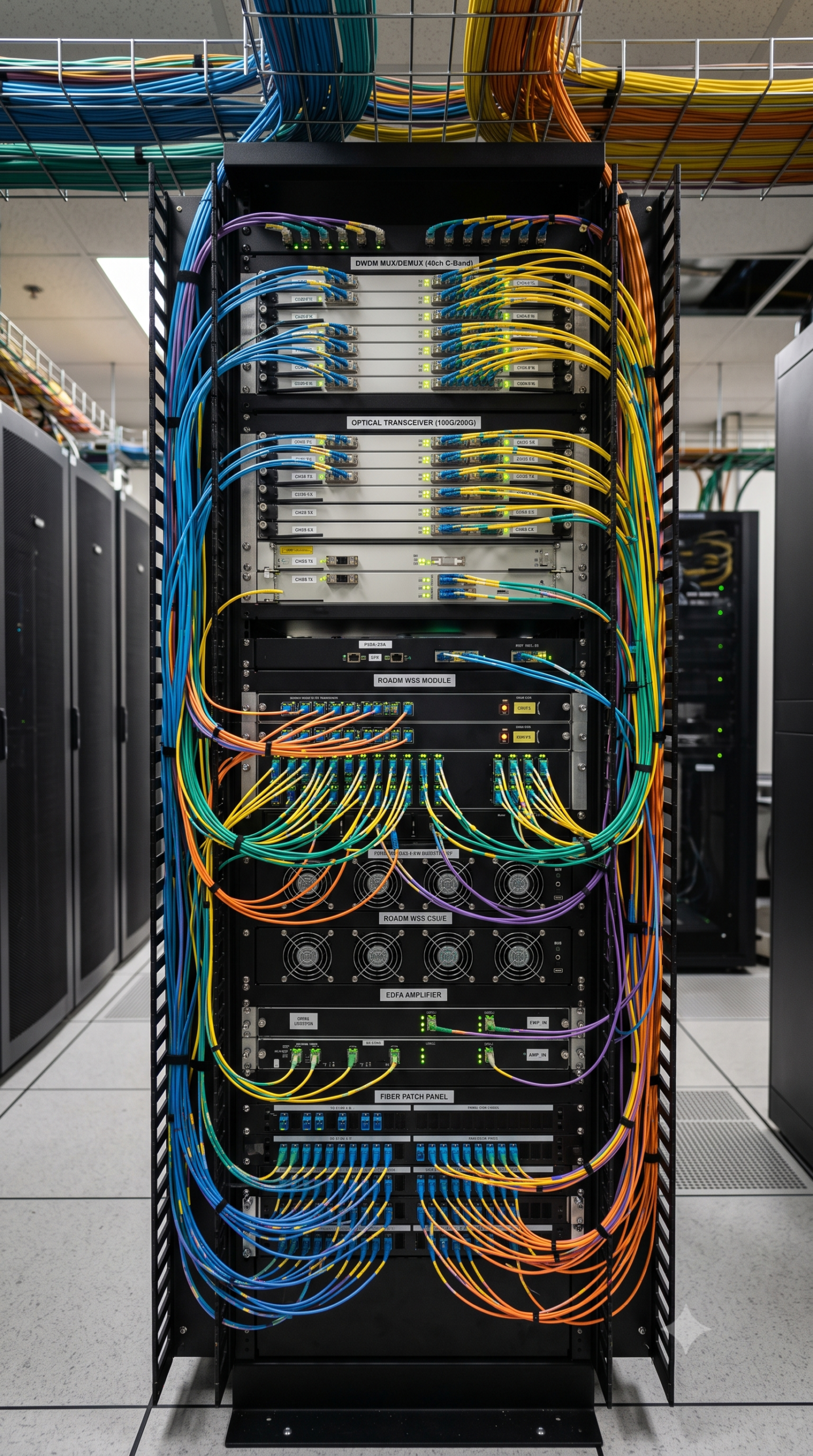
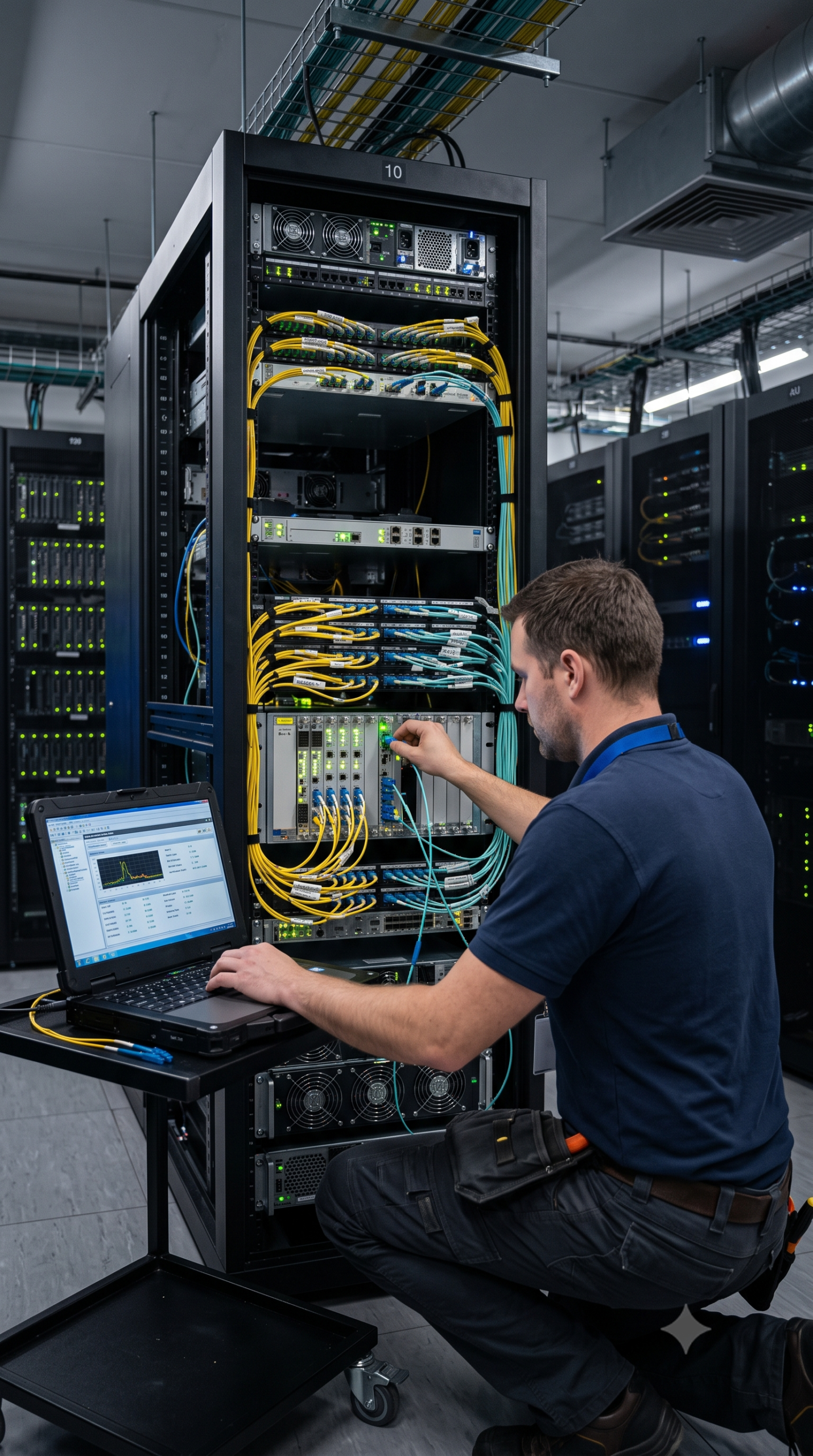
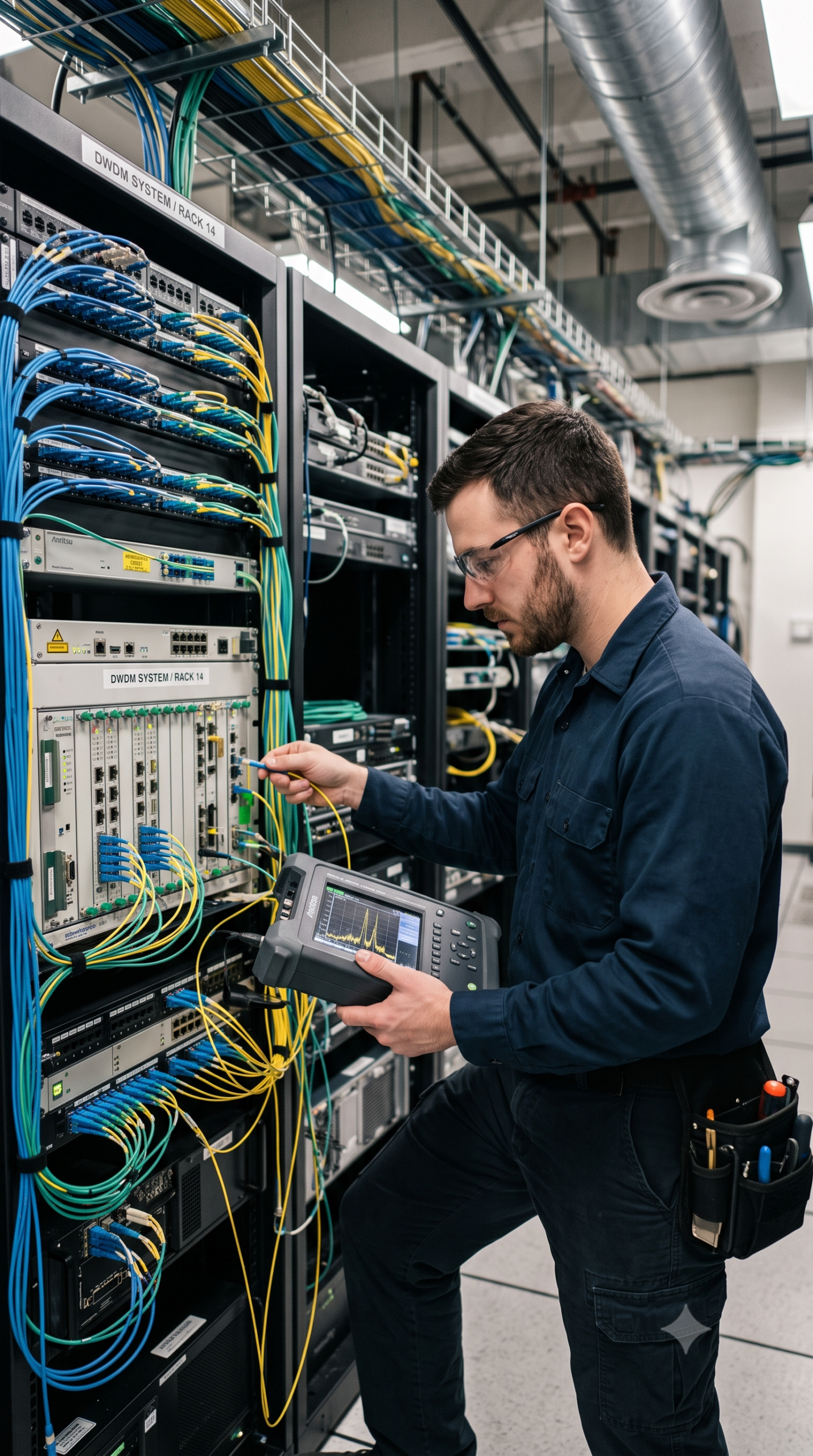
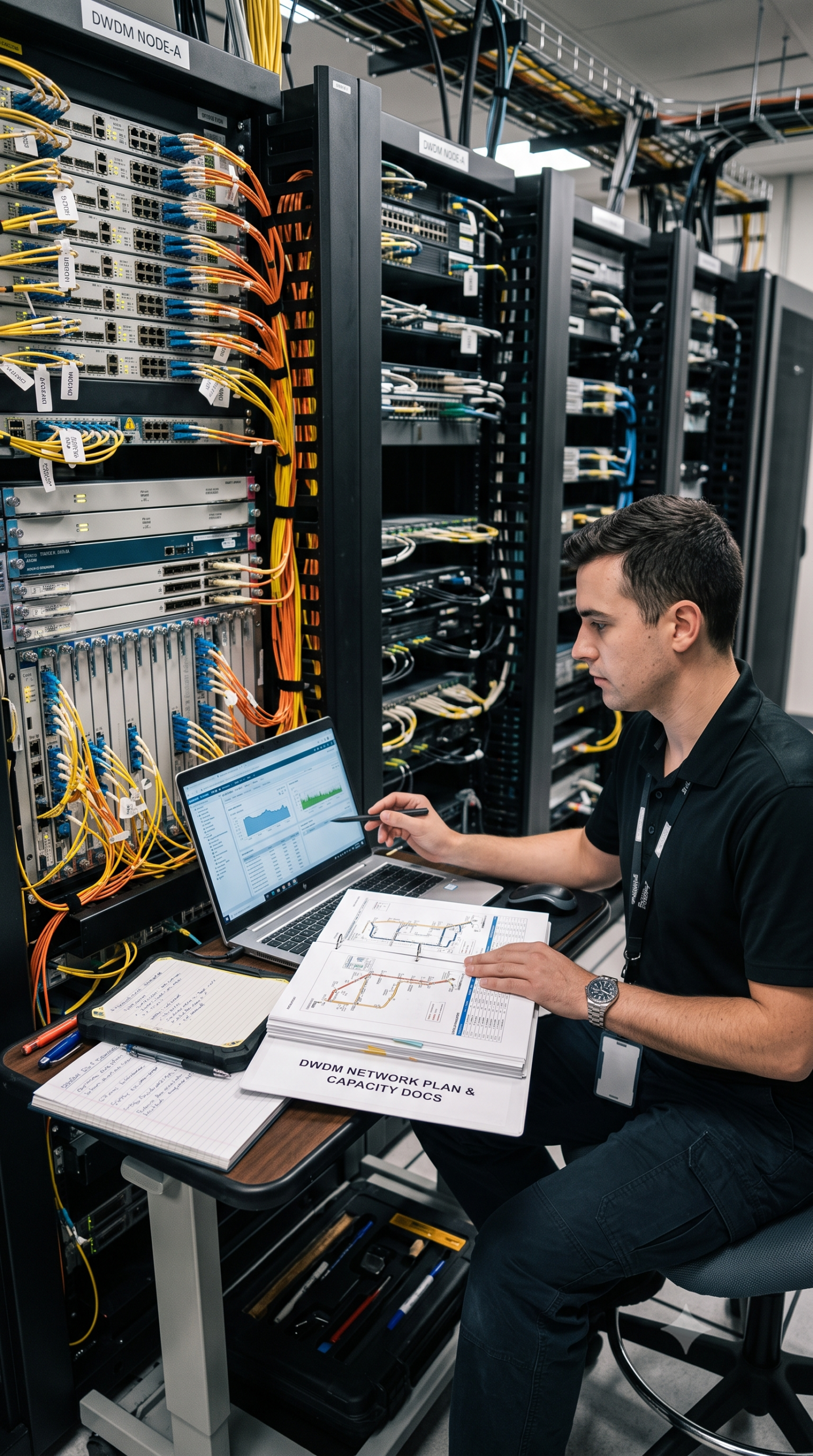
The sophisticated orchestration of light to support massive data throughput and global cloud workloads. Mercury Z delivers the technical precision, link-budget accuracy, and vendor-specific expertise required for next-generation transport environments.
Mercury Z bridges the gap between theoretical network architecture and tactical optical execution, shifting from legacy transport methods to advanced Dense Wavelength Division Multiplexing (DWDM) to maximize spectral efficiency across every fiber strand.
Whether you are upgrading a metro ring to 400G or architecting a long-haul core backbone, our engineering teams deliver the technical precision, link-budget accuracy, and vendor-specific expertise required for next-generation transport environments.
Leveraging a dual-tier recruiting engine to solve complex staffing challenges and accelerate project velocity through local and global talent. Unlike traditional staffing firms, Mercury Z provides a “Global Thinking” approach to DWDM engineering that remains deeply rooted in local market execution ensuring our clients can maintain 24/7 productivity without sacrificing technical oversight or in-market precision.
We provide high-level transport engineers and network architects for “office-type” engineering roles, including remote circuit design and database management. Whether a data center requires specialized in-market talent for physical oversight or remote architects for long-range planning, our recruiting engine sources the exact U.S.-based or global resources required. This flexible model allows you to scale internal engineering capacity instantly to meet fluctuating project demands.
We offer a differentiated delivery model that pairs local, onshore project leads with high-capacity offshore engineering teams to maximize technical output. This “follow-the-sun” approach ensures that while your local team handles field coordination and strategy, the global team manages data-intensive tasks like link-budget calculations and inventory reconciliation. By integrating these tiers, we deliver higher productivity and shorter project lifecycles than traditional single-market competitors.
Mercury Z solves modern staffing challenges by taking on entire workstreams, allowing your core team to focus on high-level business strategy. We don’t just provide bodies we provide managed engineering units equipped with technical leadership and DWDM-specific knowledge. This end-to-end management, backed by our comprehensive U.S. and global recruiting resources, mitigates the risk of turnover and ensures consistent quality across large-scale transport rollouts.
Maximizing the ROI of your physical plant through non-invasive field intelligence. Many carriers and ISPs struggle with “Network Drift” a growing disconnect where legacy systems no longer match the physical reality of the hub.
Maximizing the ROI of your physical plant through non-invasive field intelligence. Many carriers and ISPs struggle with “Network Drift” a growing “Database vs. Daylight” disconnect where legacy systems like TIRKS, MetaSolv, or Granite no longer match the physical reality of the hub. Mercury Z provides high-velocity field audits to restore total visibility, a critical service for M&A due diligence during carrier acquisitions.
We utilize Live Fiber Identifiers (LFI) to detect traffic via macro-bending and non-intrusive power monitoring via dedicated TAP ports verifying circuit activity and signal strength without disconnecting cables or risking customer downtime.
Aligning physical “floor-truth” with digital records to eliminate database errors, reclaim stranded capacity, and prepare for infrastructure sales.
Specialized verification for high-density DC-to-DC connections to ensure end-to-end integrity for AI and Cloud workloads.
Analyzing signals across multi-span or multi-node architectures (sometimes 15+ locations) to ensure end-to-end integrity and capacity.
Ability to deploy technical teams across 15+ markets simultaneously for rapid, network-wide baseline audits with consistent reporting.
Forward-looking strategies for network growth, optimizing existing fiber plants through rigorous auditing and forecasting. Our architecture services bridge the gap between legacy transport and modern IP/Optical convergence.
Data-driven growth requires a deep understanding of current utilization to ensure zero-latency DCI for mission-critical workloads.
Identifying “hot” routes nearing capacity that require immediate wavelength additions before congestion impacts service.
Using historical data to forecast future bandwidth needs and prevent emergency “fire-drill” upgrades that disrupt operations.
We design pathways for staged growth, which is vital for Government and BEAD projects where high-capacity backhaul must support long-term rural broadband expansion.
Engineering the transition from legacy waves to next-generation 400G and 800G wavelengths through Baud Rate Optimization.
Opening additional optical bands, including Super C-Band (6THz) and C+L Band integration, to double spectral efficiency per fiber pair.
Identifying unused fiber assets you already own to create immediate ROI without new construction.
We engineer the integration between the routing and optical layers to support the ultra-low latency requirements of AI.
Engineering “pluggable” environments, including 400G ZR/ZR+ transceivers plugged directly into routers to eliminate unnecessary transport layers.
Engineering streamlined, automated architectures for Layer 0 (fiber) through Layer 3 (IP) to simplify operations and reduce management overhead.
We provide focused strategy for the foundation and physical mapping of transport networks to ensure every route is optimized for maximum reach and minimum latency.
Our Fiber Design and OSP Engineers identify efficient physical paths to ensure data travels the shortest distance possible.
Minimizing attenuation and latency through strategic route selection across metro and long-haul environments.
Mapping fiber paths to optimize overall reach across metro or long-haul spans while minimizing construction and permitting complexity.
Planning routes that avoid high-risk areas to ensure consistent uptime and protect against fiber cuts or outage scenarios.
We provide precise planning of channel spacing to maximize the revenue potential of every fiber strand.
Using 50GHz or 100GHz grids to maximize available wavelengths and revenue per fiber pair.
Managing guard bands and channel assignments to maintain high signal-to-noise ratios across the full optical spectrum
Expert management to prevent signal overlap and ensure clean transmission across all active wavelengths.
Bridging the gap between the office-based design and the physical infrastructure. Engineering excellence is only as good as its field execution. We deploy the “boots on the ground” from 15-person crews in major metros to specialized transport technicians to handle the dirt and the hardware simultaneously.
Providing oversight for physical fiber deployment, backbone architecture, and metro ring design.
Sending technical teams into the field to perform surveys, verify pole attachments, and document manhole/conduit availability.
Managing multi-state workforces for rapid rollouts of new fiber spans or equipment retrofits.
Ensuring sites are ready for hardware, including rack-and-stack, cabling, and power verification before equipment arrives.
Our team manages the technical intricacies of light to push fiber to its theoretical limits while maintaining carrier-grade reliability.
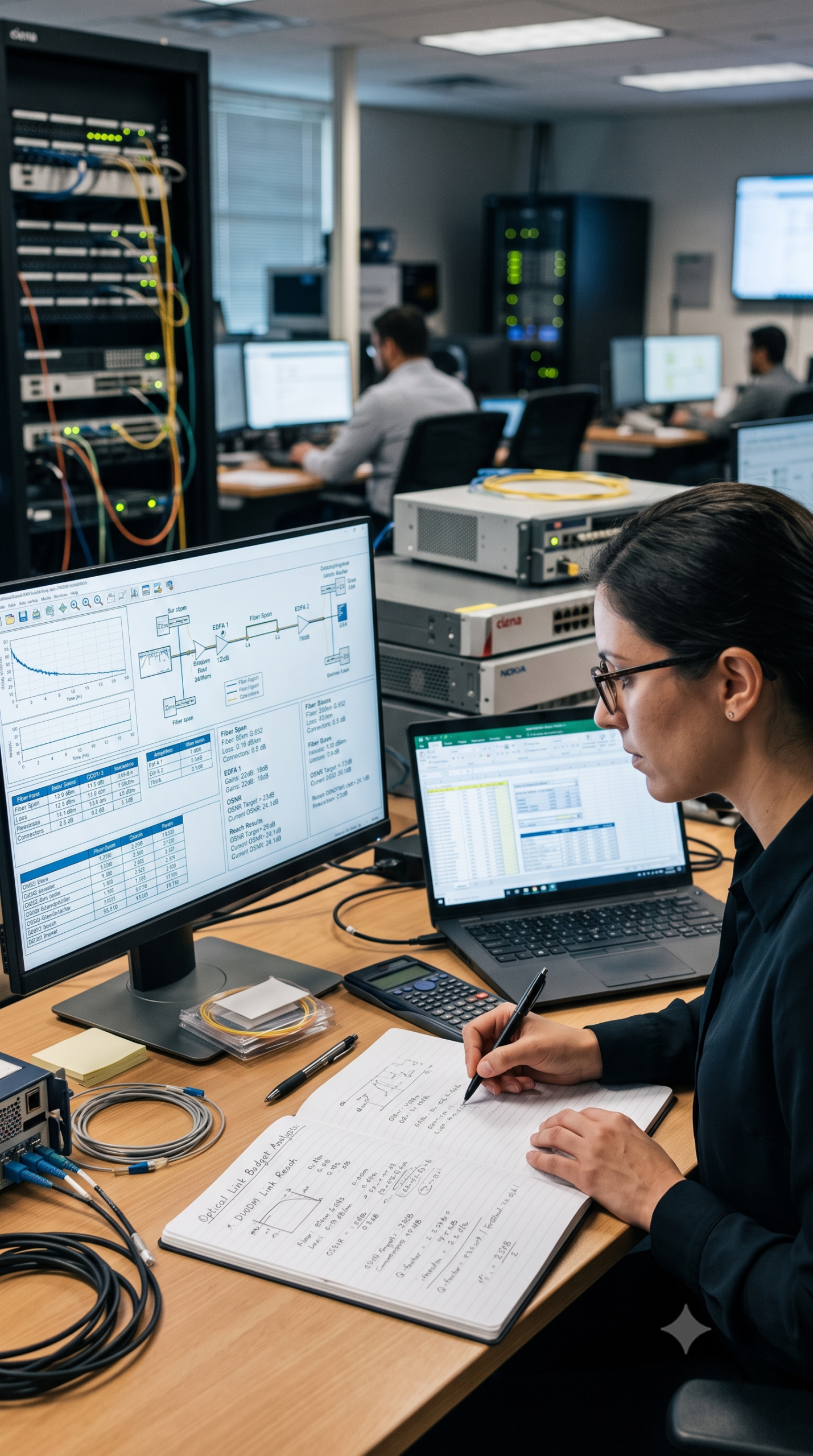
Detailed power budget analysis ensures your signal reaches its destination with perfect clarity.
Performing link budgets specifically for 100G through 800G coherent detection systems.
Calculating exact power loss across every connector, splice, and fiber span.
We manage the critical physical impairments that govern high-speed optical performance to ensure stable, interference-free waves.
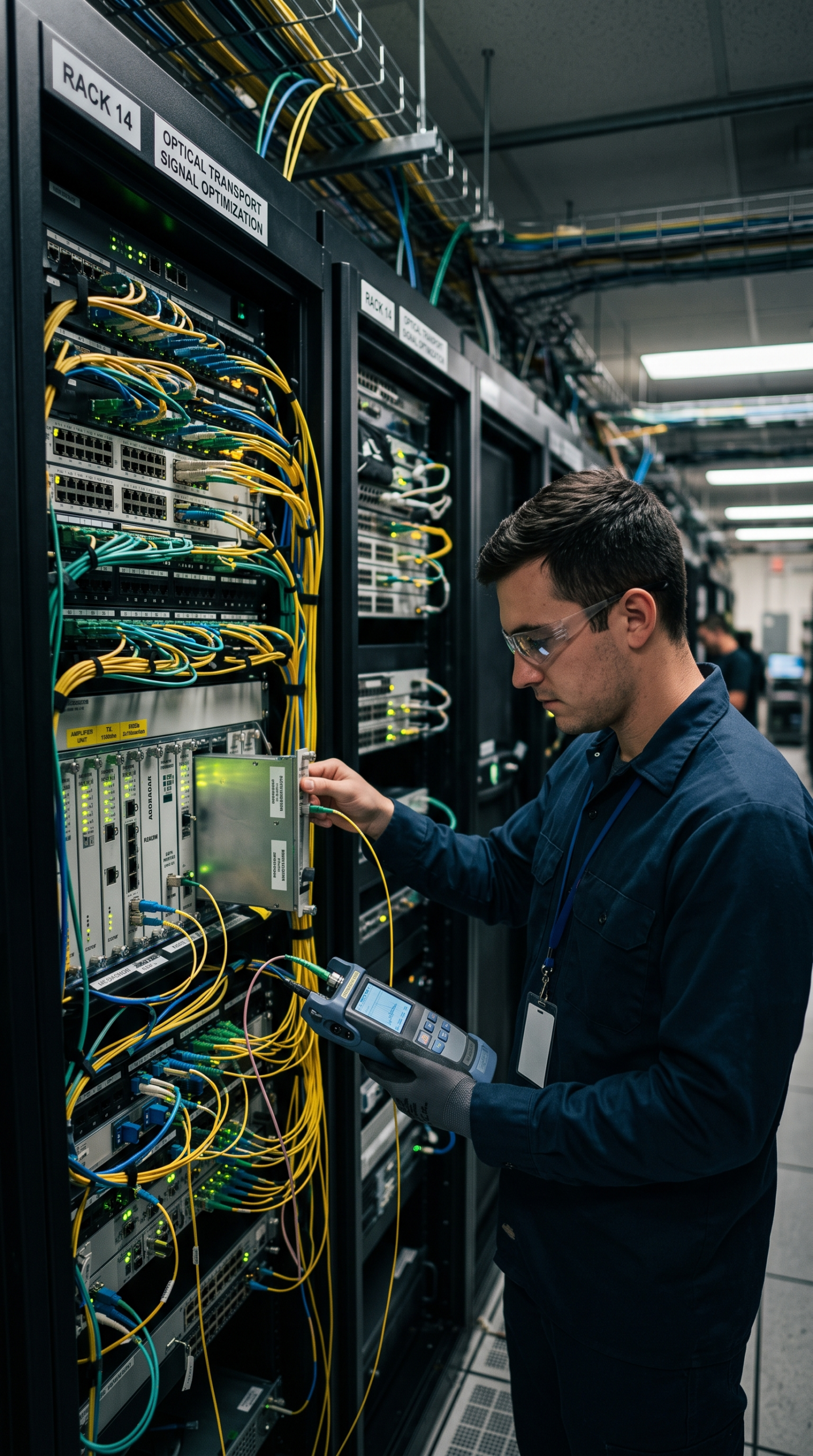
We perform meticulous planning to ensure signal strength remains significantly higher than the accumulated Amplified Spontaneous Emission (ASE) noise floor generated by EDFAs and ROADM nodes. This precise management is essential for maintaining carrier-grade reliability for high-capacity 100G+ circuits.
We utilize Electronic Dispersion Compensation (EDC) within the DSP of Coherent Detection systems to compensate for the “spreading” of light pulses electronically. This eliminates the need for physical DCMs, significantly lowering the latency floor for time-sensitive AI, high-frequency trading, and mission-critical cloud workloads.
We perform specialized characterization to track and correct for signal shifts caused by physical stresses or environmental vibrations. Our engineers design systems with real-time compensating transponders to prevent intermittent circuit “flapping.”
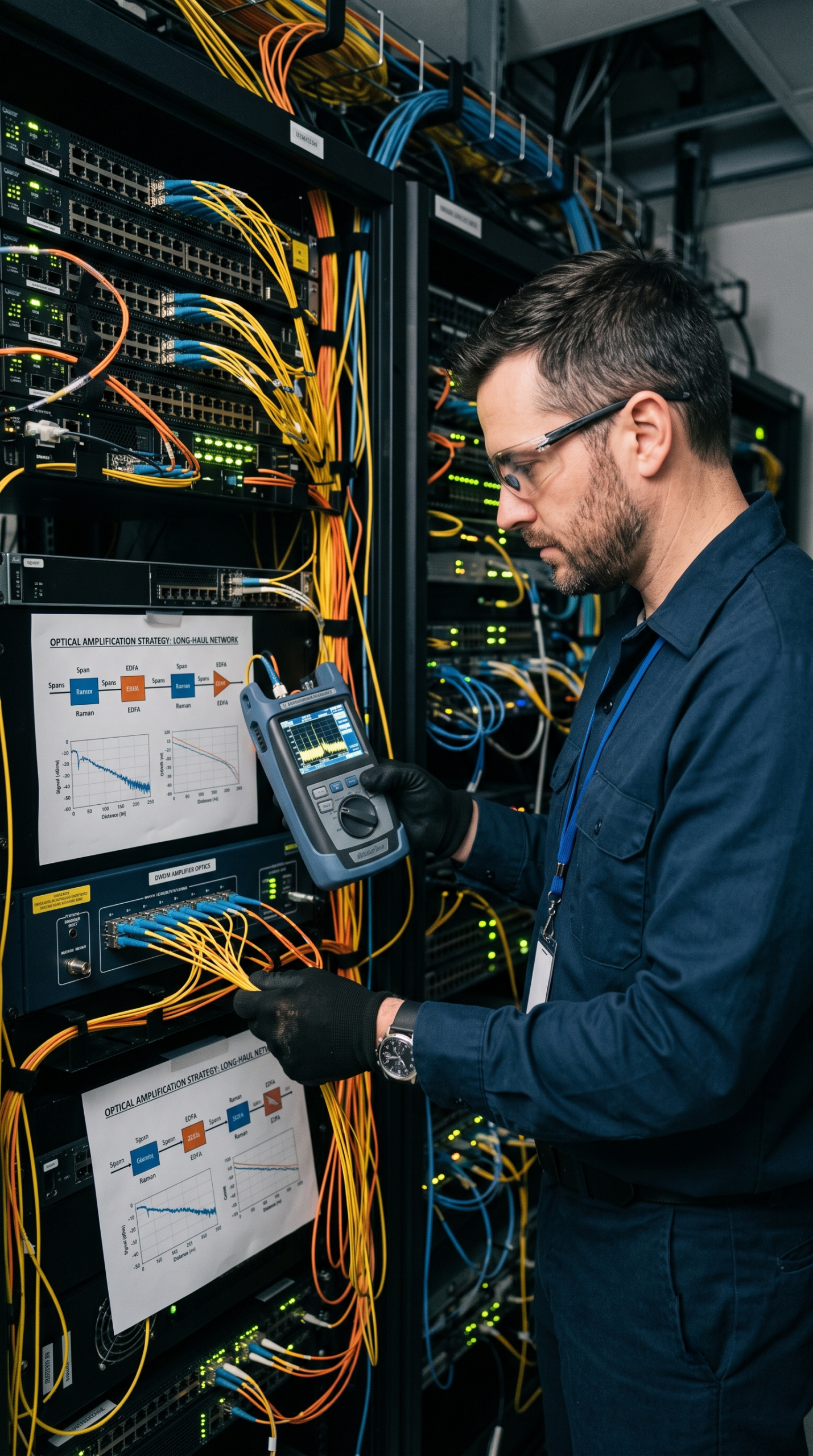
We determine the most effective placement and type of amplification based on specific link requirements.
Optimizing amplifier gain profiles to maximize OSNR while managing ASE power accumulation and suppressing non-linear effects (such as FWM and SPM).
Determining the optimal mix of EDFA and Raman amplification.
We provide vendor-neutral expertise to design hardware nodes for maximum agility and minimal downtime.
We offer specialized support for the industry’s leading equipment providers.
Expert configuration for Ciena (6500/Waveserver) and Infinera (GX/ICE) platforms.
Comprehensive design using the Nokia 1830 Photonic Service Switch (PSS) and Photonic Service Engine (PSE).
Hardware deployment and optimization for Cisco (NCS) and Huawei optical systems.
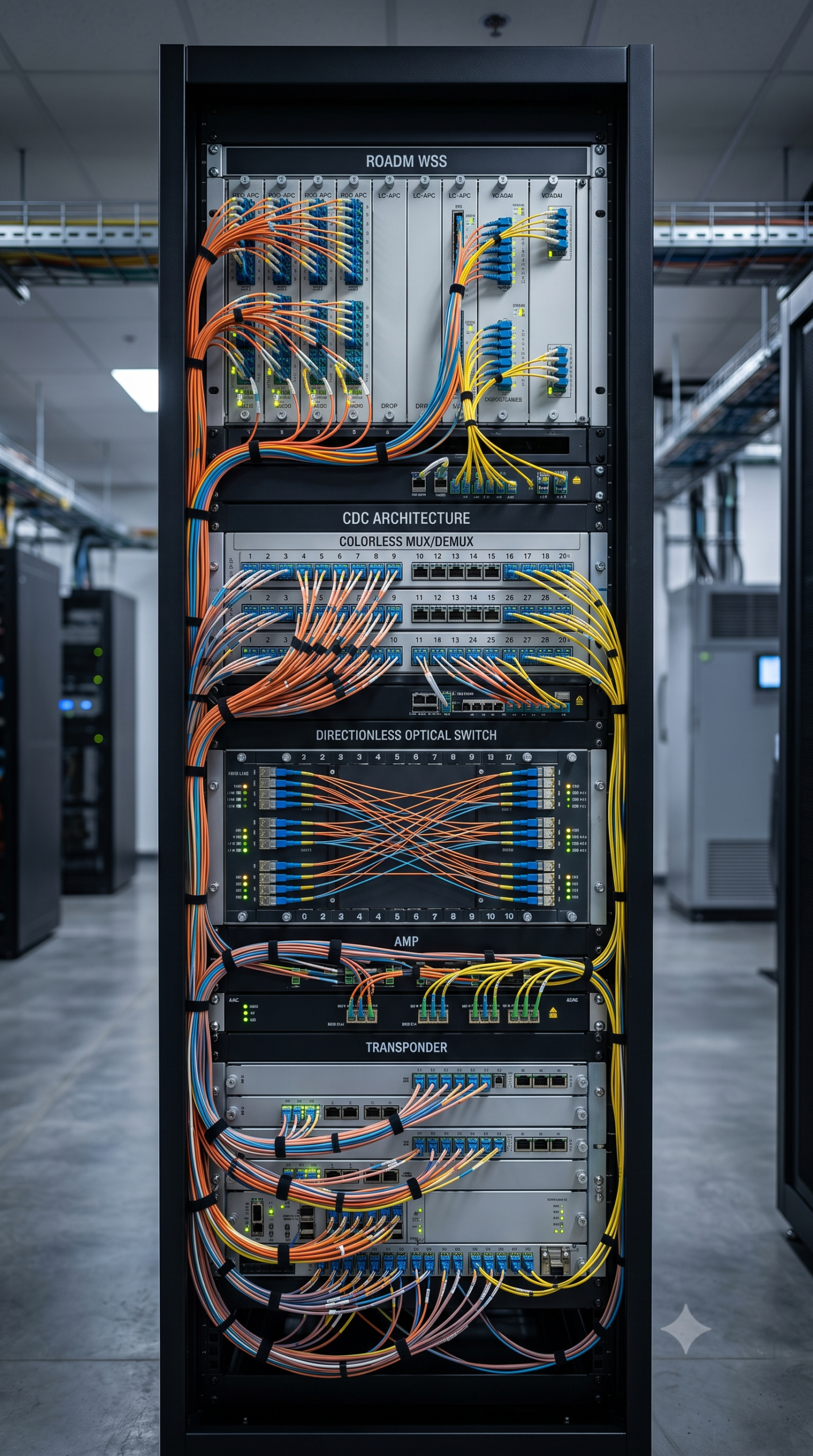
We implement Reconfigurable Optical Add-Drop Multiplexers for the agility required by changing traffic patterns.
Engineering nodes for automated A-to-Z provisioning, enabling remote wavelength management and rapid service activation without manual physical intervention.
Engineering advanced Colorless, Directionless, Contentionless (CDC) architectures for maximum traffic flexibility.
We design redundant pathways to ensure “always-on” reliability.
Designing redundant architectures (1+1, 1:N, or Mesh) to ensure sub-50ms restoration in the event of fiber cuts or equipment failure.
Strategically grouping lower-speed circuits into high-speed wavelengths to maximize hardware efficiency.
Mercury Z provides the technical personnel and historical expertise to maintain legacy infrastructure while migrating toward a Software-Defined Networking (SDN) future.
Our team is proficient in the industry-standard databases used by Tier I and Tier II carriers.
Expert management, data integrity scoring, and sanitization of legacy databases (TIRKS/MetaSolv) to ensure a clean migration to SDN-controlled environments.
Transitioning legacy circuit information into modern SDN controllers for automated management.
We provide “hands-on” technical work required to activate and optimize network traffic.
End-to-end activation of high-capacity wavelengths.
Moving active traffic from aging infrastructure to newer, high-capacity DWDM spans.
We provide detailed DWDM network design services covering channel planning, amplifier placement, optical power budgeting, dispersion management, and route optimization.
A well-engineered DWDM design is the foundation of reliable, long-term optical network performance. Mercury Z provides detailed DWDM network design services covering channel planning, amplifier placement, optical power budgeting, dispersion management, and route optimization producing designs aligned to current capacity requirements and long-term growth goals. Our engineers work across new builds, capacity expansions, and technology upgrades, applying vendor-neutral expertise to develop designs that meet performance specifications and minimize operational risk. Mercury Z DWDM design services deliver engineered, documented architectures that give your network a reliable performance foundation from the first wavelength to full capacity.
Systematic wavelength assignment and channel planning to maximize spectral efficiency and support future capacity additions.
Precise amplifier placement and EDFA/Raman gain design to ensure optimal OSNR across every span of the network.
Detailed power budget calculations confirming that every signal reaches its destination with sufficient margin for reliable operation.
Engineering CD and PMD compensation strategies appropriate for the modulation format and span distances of the network design.
Design of Reconfigurable Optical Add-Drop Multiplexer architectures, including CDC configurations for maximum traffic flexibility.
Complete engineering documentation including topology diagrams, route maps, and channel records aligned to operational handover requirements.
Configuring and commissioning DWDM equipment demands technical depth, platform experience, and a disciplined verification process.
Configuring and commissioning DWDM equipment demands technical depth, platform experience, and a disciplined verification process. Mercury Z engineers follow structured commissioning procedures and conduct detailed verification testing to confirm every element is performing to design specifications. Mercury Z equipment commissioning services ensure every DWDM network element is correctly configured, tested, and documented before service is activated.
Precise configuration of optical line cards, transponders, and muxponders per the network design and vendor specifications.
Fine-tuning of EDFA gain and tilt to achieve flat spectral response and optimal performance across all active wavelengths.
Configuration of ROADM channel switching, WSS profiles, and degree-to-degree routing parameters.
Setup and verification of NMS/EMS management plane connectivity, SNMP traps, and alarm configurations for operational visibility.
End-to-end link commissioning and performance testing per structured test plans to confirm all wavelengths meet service acceptance criteria.
Complete commissioning documentation, test results, and as-built records delivered for operational handover.
Optical performance validation is a critical step before any DWDM network enters service.
Optical performance validation is a critical step before any DWDM network enters service. Mercury Z engineers conduct detailed optical performance analysis to confirm that every wavelength meets design specifications. Our analysis services also support operational networks where performance has degraded, identifying impairments, isolating root causes, and recommending corrective action. Mercury Z optical performance analysis confirms network health before service launch and provides the data needed to resolve impairments quickly when they occur.
Precise OSNR measurement per channel to verify signal quality margins across the full optical band.
Per-channel optical power measurement and characterization to confirm launch levels, receive levels, and span loss across the network.
Measurement and analysis of CD and PMD to confirm dispersion parameters are within system tolerance for the target modulation format.
Verification of channel center frequencies, spacing uniformity, and wavelength accuracy against the channel plan.
Noise figure measurement and analysis of inline amplifiers to identify units contributing excessive ASE noise to the optical path.
Structured performance baseline documentation providing the reference records needed for ongoing monitoring and future troubleshooting.
DWDM network performance issues require engineers who can move quickly from symptom to root cause.
DWDM network performance issues require engineers who can move quickly from symptom to root cause. Mercury Z provides structured troubleshooting and optimization services for carriers, data center operators, and enterprises managing active transport networks. Our engineers have hands-on experience diagnosing signal degradation, channel impairments, amplifier performance issues, and equipment failures. Mercury Z troubleshooting and optimization services restore network performance quickly and deliver documented root cause analysis that supports long-term network reliability.
Systematic diagnosis of signal degradation events to identify root cause and distinguish between fiber, connector, amplifier, and transponder issues.
Per-channel impairment analysis including BER measurement, Q-factor assessment, and constellation diagram analysis for coherent systems.
Hands-on investigation of amplifier gain profiles, noise figure measurements, and gain tilt conditions contributing to network performance issues.
OTDR-based span loss measurement, connector inspection, and remediation to resolve high-loss conditions impacting network margin.
Post-resolution optimization of amplifier settings, channel power levels, and dispersion compensation to maximize network performance margins.
Structured post-resolution testing to confirm restoration and documented root cause analysis for operations team records.
Proactive capacity planning and accurate documentation keep optical networks ready to grow with demand.
Proactive capacity planning and accurate documentation keep optical networks ready to grow with demand. Mercury Z provides capacity analysis and planning services that give your network a clear path forward. Our engineers deliver structured capacity plans, engineering documentation, network diagrams, and channel records that give operations and planning teams the information they need to make confident decisions. Mercury Z capacity planning and documentation services ensure your optical network is ready to grow and your engineering teams have accurate records to support confident operational decisions.
Data-driven traffic forecasting models that quantify future bandwidth demand and identify the timeline for capacity augmentation.
Analysis of current channel loading and capacity utilization to identify constrained routes and available spectral resources.
Structured upgrade path recommendations prioritized by business impact, technical feasibility, and capital efficiency.
Accurate, current network topology diagrams and route maps maintained to reflect the live network state.
Structured channel plans and wavelength assignment records that give operations teams full visibility into spectral usage.
Complete as-built and commissioning records aligned to operational handover requirements and long-term network management needs.
As data demands grow, your transport network must keep pace. From initial design to hardware engineering, we help you leverage DWDM technology to increase capacity and future-proof your high-bandwidth infrastructur