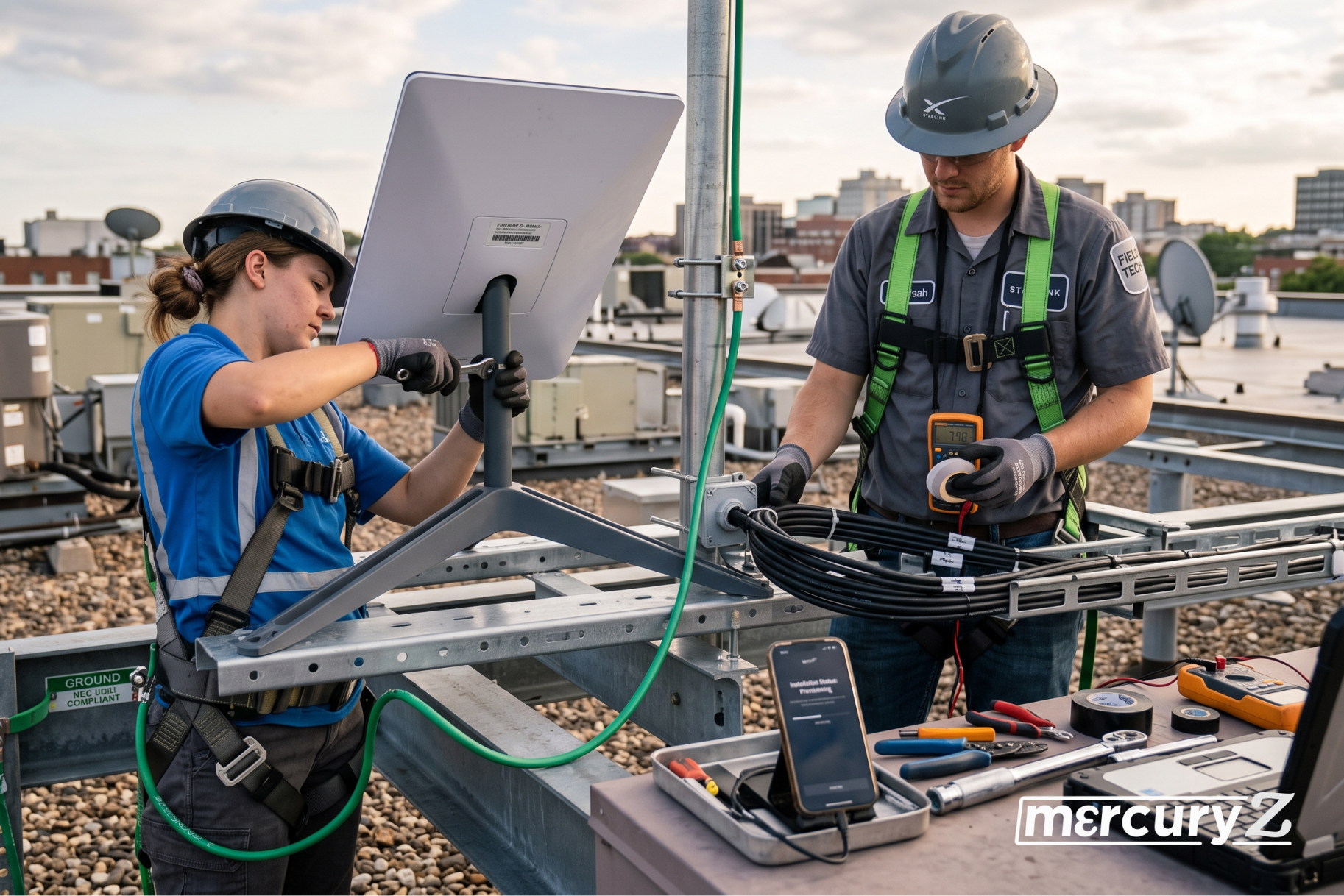
The V3 upgrade wave is coming, and most companies aren’t ready for it. SpaceX is pushing Starlink Business V3 hardware upgrades across enterprise and carrier accounts throughout 2026. Every upgrade needs a certified technician, someone who can remount the dish, reconfigure the SD-WAN, and validate the network before leaving the site. There aren’t enough of them. That gap is exactly where Mercury Z is positioned.
Sources: Mercury Z certification program data; SpaceX Starlink Business V3 rollout communications
The Starlink Opportunity Is Bigger Than Installation
When most companies think about Starlink, they think about the dish. They think about mounting it to a roof and pointing it at the sky. That’s Track A, and it’s real work with real demand. But the bigger opportunity is Track B: the enterprise network integration side.
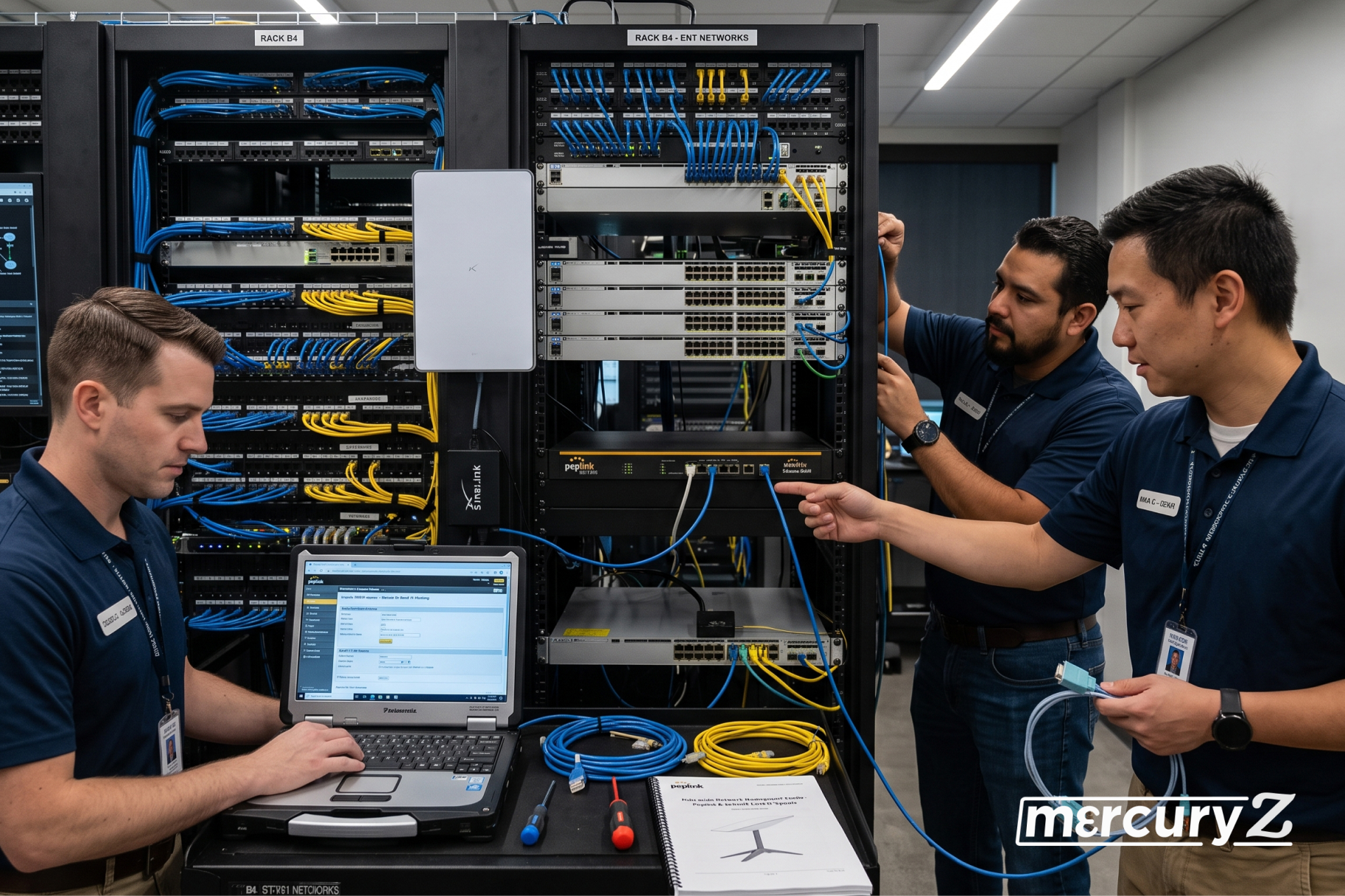
Starlink runs on CGNAT by default, which creates routing challenges in enterprise environments. Bypassing it, integrating Starlink as a primary or failover WAN through a Peplink SD-WAN router, configuring Meraki MX failover, and validating the full setup, that requires a CCNA-level tech who understands both satellite and enterprise networking. Those techs are rare, and the demand for them is growing fast as carriers, construction firms, stadiums, and remote enterprise sites all move toward Starlink as a connectivity layer.
Mercury Z is building the national workforce for both tracks.
How Mercury Z’s Starlink Practice Works
Mercury Z has developed a two-track certification program for Starlink technicians, housed on jobs.mercuryz.com:
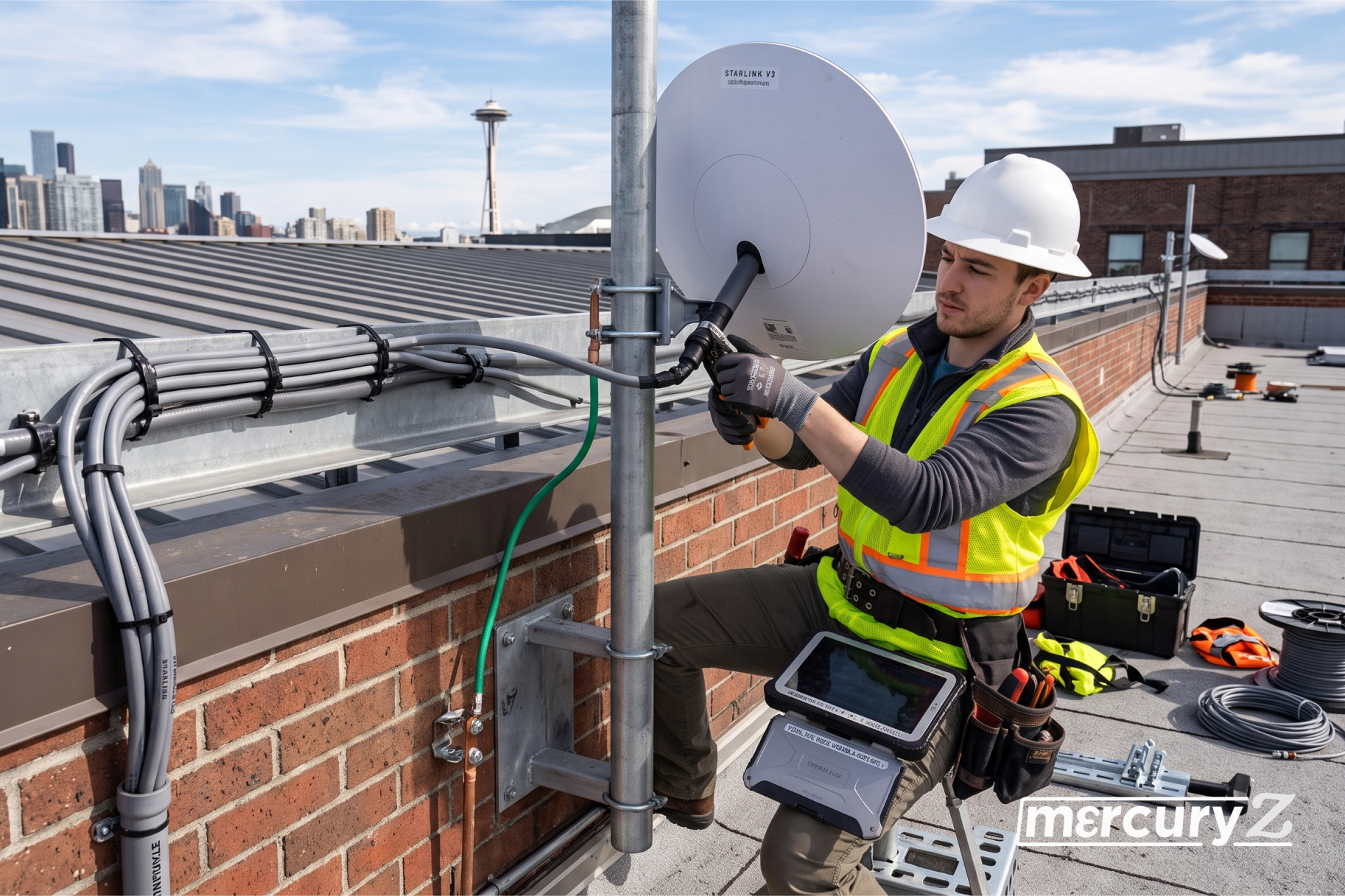
- Dish mounting — roof, pole, ground
- Cable routing & NEC grounding
- Weatherproofing
- Starlink app provisioning
- Starlink CGNAT bypass
- Peplink SD-WAN configuration
- Meraki / Cisco / Fortinet failover integration
- VLAN segmentation
- Validation testing
Every MZ Starlink-certified tech gets a designation on their jobs.mercuryz.com profile, making them instantly searchable when a carrier or enterprise client needs a deployment.
We’ve also built the operational infrastructure around it: a standard Starlink Installation Playbook, carrier-facing Work Order templates, escalation procedures for SpaceX and Peplink support, and a coordinator dispatch model that can deploy techs nationally, not just locally.
Why This Matters Right Now
The V3 upgrade wave isn’t a future event, it’s happening now. Carriers are getting notified. Enterprise accounts are being scheduled. Sites that upgraded 18 months ago are due for hardware refreshes. And every one of those deployments needs a qualified tech who can show up, do the job correctly, document it, and hand off cleanly.
The companies that build their Starlink installation capability now, whether they’re hiring a dedicated team or tapping a pre-vetted virtual bench, will be the ones positioned to take on carrier-scale deployment contracts. The ones that wait will be scrambling to find techs in a market that’s already tight.
Mercury Z’s Virtual Bench model means you don’t have to build the team yourself. We maintain the bench. We vet the techs. We deploy nationally.
If your organization is preparing for Starlink deployments, whether you’re a carrier, a managed service provider, or a GC with enterprise clients asking about connectivity, visit mercuryz.com to see how we can support your rollout.
Mercury Z deploys certified field teams for Starlink installation, SD-WAN integration, and enterprise connectivity projects nationwide. Contact us at info@mercuryz.com or visit mercuryz.com/contact-us/
Sources
- SpaceX — Starlink Business — Enterprise and Carrier Solutions
- Peplink — Peplink SD-WAN Technology Overview
- Cisco — CCNA Certification — Cisco
- OSHA — OSHA 10/30-Hour Construction Industry Training
- Mercury Z — Internal certification program and deployment data