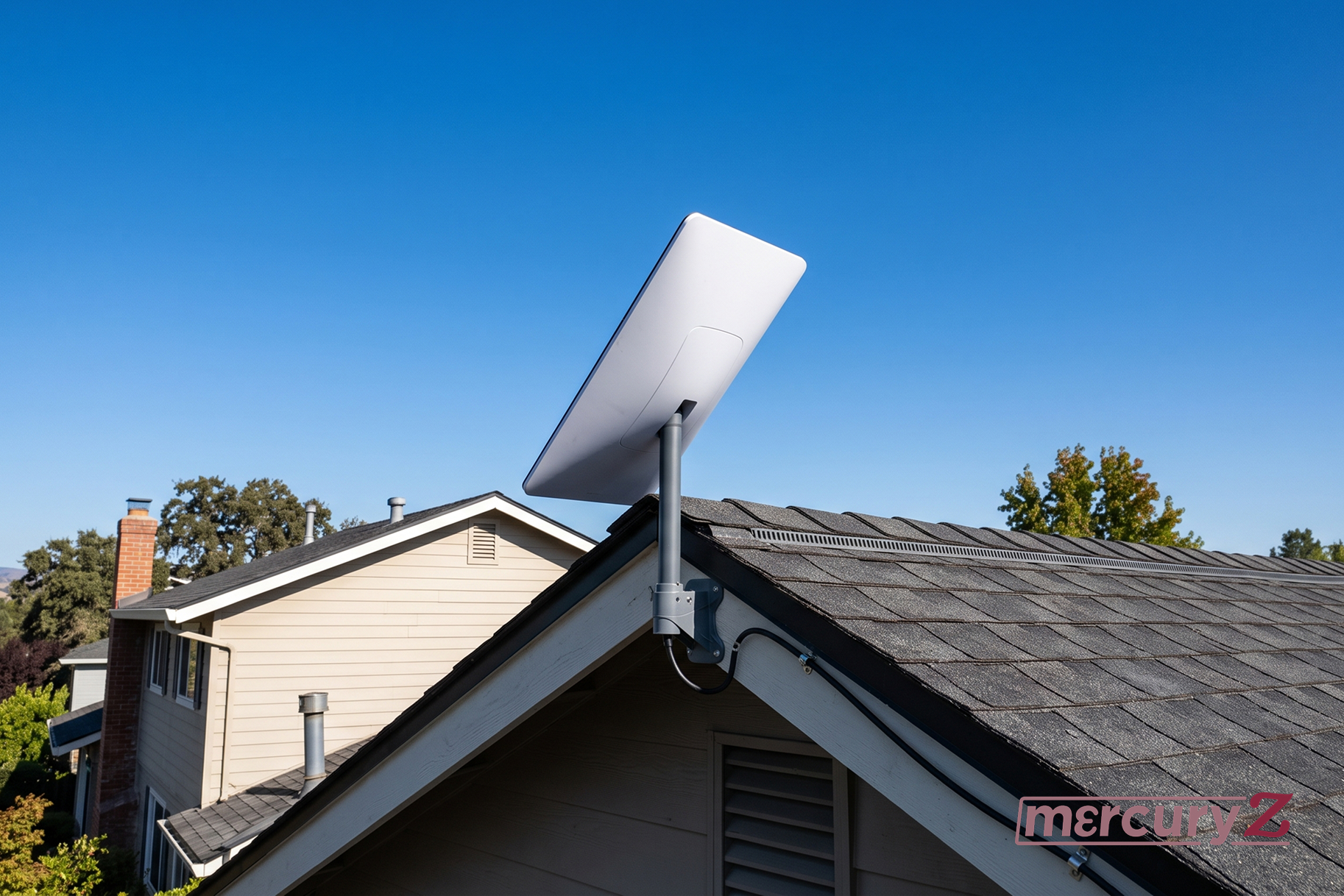
There’s a shift happening in commercial connectivity that most IT teams are still catching up to. Starlink Business — SpaceX’s enterprise-grade satellite internet service — is no longer just a fallback option for rural sites. It’s becoming the primary connectivity layer for construction sites, stadium events, carrier deployments, and enterprise campuses where laying fiber isn’t fast enough or economically viable.
And as the deployments scale up, one thing is becoming clear: the bottleneck isn’t equipment. It’s certified installers.
Starlink Business — By the Numbers
Sources: SpaceX Starlink Business; Mercury Z field data
What Starlink Business Actually Delivers
The Starlink Business tier is different from the residential product most people know. It runs on dedicated capacity with speeds ranging from 100–500 Mbps down and latency as low as 20–40ms — numbers that weren’t achievable via satellite just five years ago. SpaceX’s second-generation satellites, combined with flat high-performance dish arrays, have changed the physics of what satellite internet can do.
What does this mean in practice?
- A construction site with 50+ workers can run VoIP, project management software, and security camera feeds simultaneously.
- A stadium or event venue can deploy Starlink as a temporary network for broadcast, ticketing, and staff communications — without waiting for a carrier to run new fiber.
- A data center or enterprise campus in a secondary market can get Tier 1 connectivity without a 12-month fiber construction timeline.
According to SpaceX, Starlink Business has been deployed in more than 100 countries, with enterprise and government contracts accelerating through 2025 and 2026. In the U.S., major carriers including Lumen Technologies have begun integrating Starlink into their enterprise service portfolios — which means carrier-driven deployments are now a market in their own right.
The Deployment Complexity Most People Underestimate
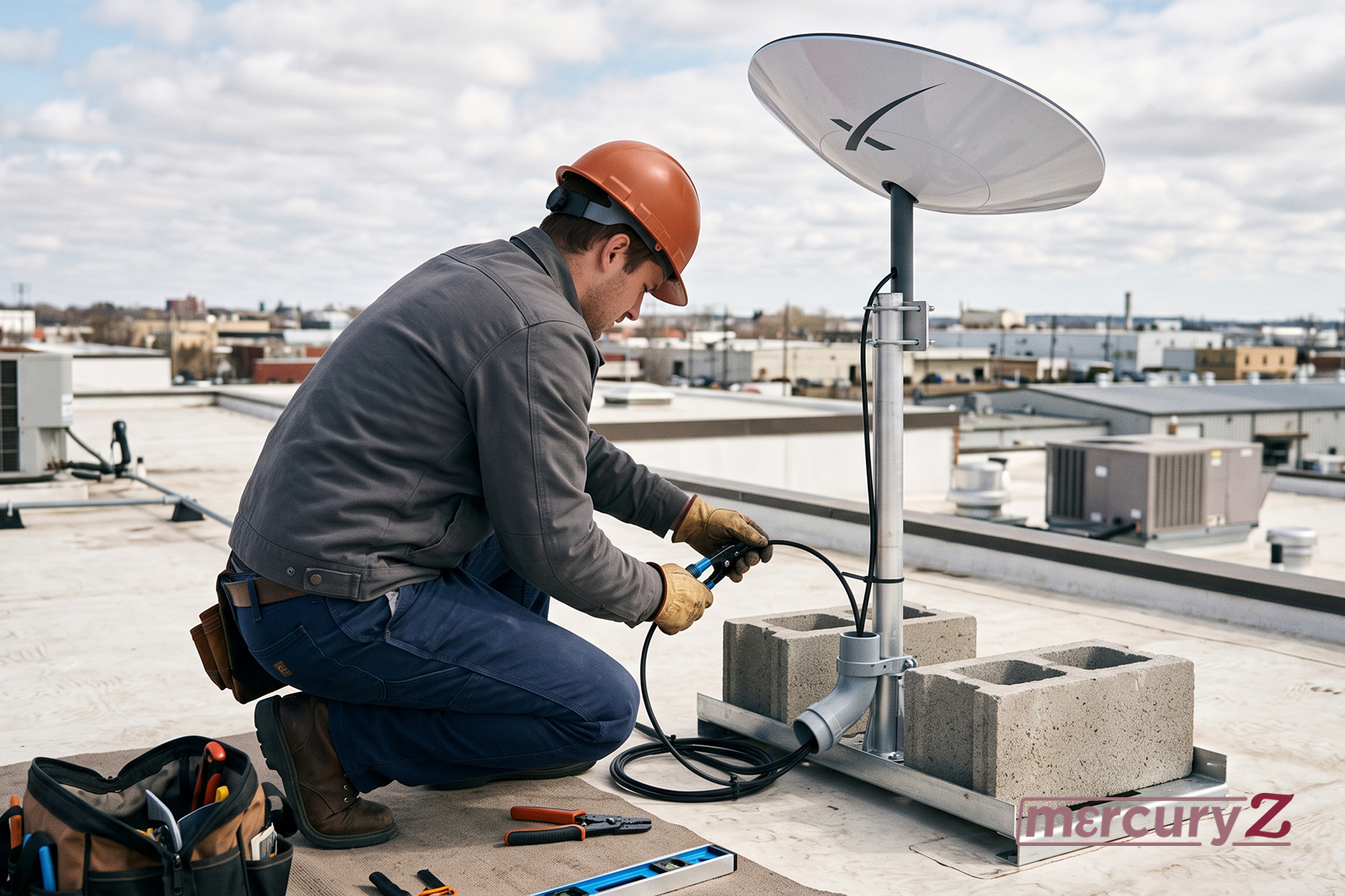
Here’s what’s easy to miss from the outside: Starlink Business is not a plug-and-play product at enterprise scale. A clean commercial deployment requires:
Physical installation expertise. The Flat High Performance dish requires precise orientation, proper mounting hardware (pole, wall, roof, or ground), and cable management that meets commercial building standards. Done wrong, you get poor performance or a warranty-voiding installation.
Network integration. Starlink Business doesn’t just hand off an IP address and walk away. It needs to integrate with existing SD-WAN environments, failover configurations, VLAN setups, and firewall policies. Most enterprises run Peplink, Cisco Meraki, or similar — and knowing how Starlink’s routing behavior interacts with those platforms is non-trivial.
Site survey and RF awareness. You need a clear view of the northern sky (in the Northern Hemisphere). Obstructions, interference sources, and cable routing all affect performance. A proper pre-installation site survey isn’t optional — it’s the difference between a clean handoff and a callback.
Commissioning and documentation. Enterprise clients need speed test records, photos, configuration documentation, and sign-off. Carriers require this before paying.
None of this is difficult for someone who knows it. But it requires training, field experience, and certification — not just a willingness to climb on a roof with a wrench.
Why the Market Is Outrunning the Certified Installer Supply
Starlink’s growth trajectory has created a skills gap that the traditional telecom workforce hasn’t caught up to yet.
The issue is twofold. First, Starlink Business deployments are relatively new at scale, which means the pool of technicians with real field experience is still small. Second, the certification pathway through SpaceX’s channel programs is not widely known or accessible to independent technicians.
Mercury Z saw this gap forming in early 2025 and made a deliberate decision: build a certified Starlink installation team before the demand curve hit. That meant investing in technician training, aligning with carrier deployment programs, and establishing operational playbooks for the full installation workflow.
The result is a field team that can handle commercial Starlink deployments from site survey through final commissioning — and the documentation to prove it to enterprise clients.
For carriers rolling out managed Starlink services to their enterprise customers, this kind of plug-in field operations capability is exactly what they need. They have the customer relationships and the service contracts. They need trusted partners who can execute in the field at scale, across multiple markets.
What Certified Installer Demand Looks Like Right Now
The demand signals are consistent:
Data centers: Secondary-market data center sites — especially in markets like Birmingham, Montgomery, Huntsville, and emerging Midwest locations — increasingly need connectivity solutions that don’t require a 6–12 month fiber build timeline. Starlink Business fills that gap, and certified installers are needed to execute.
Construction and GC-driven projects: Major general contractors running large commercial construction projects need job site connectivity for safety systems, project management, and crew communications. Mercury Z has active relationships with GCs like Mortenson, Turner, and DPR — all of whom have connectivity needs on active job sites.
Carrier program deployments: As Lumen and other carriers build out managed Starlink service offerings for their enterprise customer base, they’re creating demand for channel partners who can staff field deployments at scale. This is a recurring, high-volume opportunity.
Stadiums and event venues: Large-scale events need temporary or supplemental Starlink deployments for broadcast-quality connectivity. Mercury Z’s team has experience in stadium environments, with installations supporting 5,000+ concurrent users.

What This Means If You’re a Field Tech
If you’re a network technician, cable technician, or field electrician, Starlink certification is rapidly becoming one of the most valuable credentials you can add. Here’s why:
The hardware is new. It’s going everywhere. Experienced Starlink installers are still rare enough that certified techs have significant leverage in the job market. And because Starlink deployments often happen in markets where other tech work is also expanding — data centers, carrier network upgrades, commercial construction — you’re rarely going to a market for one job.
Mercury Z offers Starlink certification training as part of its technician development program. If you’re already credentialed in networking or low-voltage work, you can get up to speed quickly and start deploying commercially.
The Bottom Line
Starlink Business is growing faster than the installer base can keep up. The technology has crossed the threshold from “interesting alternative” to “enterprise-grade primary option” — and the deployment machine needs skilled, certified people to make it work.
For Mercury Z, this is the moment the company has been building toward. And for field technicians who want to be on the right side of the next wave of infrastructure work, Starlink certification is the move.
Mercury Z deploys certified field teams for Starlink Business installations, carrier deployments, and enterprise connectivity projects. Operating across markets nationwide! Contact us at info@mercuryz.com or apply at mercuryz.com/careers/
Sources
- SpaceX — Starlink Business product specs and global deployment data
- Lumen Technologies — Enterprise Starlink integration program
- Mercury Z — Internal field deployment data (stadium installations, carrier programs)