In the high-stakes race to bridge the digital divide, the most expensive mistakes occur on paper rather than in the field. For ISPs and cooperatives, mastering OSP engineering for broadband deployment is no longer a luxury; instead, it serves as the primary tool for financial survival in a market where every cent of grant funding faces intense scrutiny.
Featured Snippet Optimization: Successful broadband deployment relies on high-quality OSP engineering to mitigate risks like permit rejections and unforeseen make-ready costs. By utilizing GIS data and Scalable Engineering models, providers can scale their network design phase efficiently. Consequently, this ensures that construction crews avoid costly field changes and stay within BEAD grant budget constraints.
The 1-10-100 Rule of OSP Engineering for Broadband Deployment
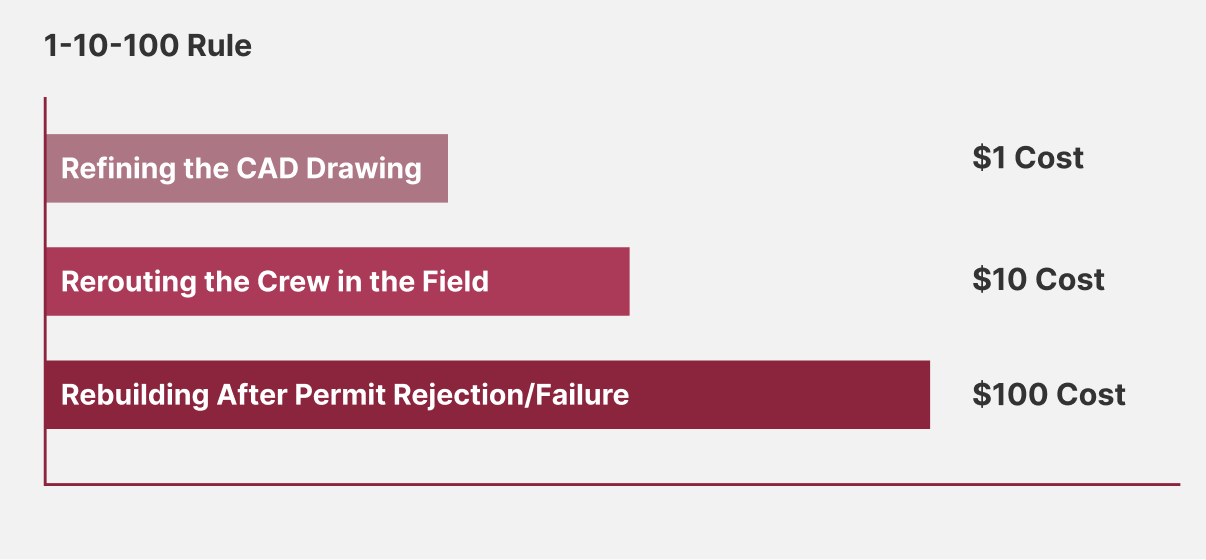
In the telecommunications world, the “1-10-100 Rule” serves as a stark warning for project managers. Based on established Quality Management principles originally developed by George Labovitz, the rule defines how costs escalate:
- $1 covers the fix during the design/engineering phase.
- $10 covers the fix during the construction phase.
- $100 covers the fix after the network is live.
The 1-10-100 Rule: Precision in OSP engineering for broadband deployment saves $99 for every $1 spent during design.
For entities racing to meet BEAD deployment milestones set by the NTIA, this rule represents a financial cliff. While the pressure to “turn dirt” is immense, the physical act of laying fiber merely verifies a mathematical model. If your OSP engineering for broadband deployment fails, the plow hits rock, authorities reject permits, and your budget evaporates.
The Rural Reality: Why Design Matters
Unlike urban builds, rural deployments offer no “copy-paste” solutions because the BEAD program targets “unserved” areas that are notoriously difficult to reach.
These routes traverse granite mountain passes and rely on utility poles that haven’t faced an audit in decades. According to the Fiber Broadband Association, make-ready work and permitting delays now act as the top drivers of budget overruns. Furthermore, without verified pole loads and soil conditions, a route that looks viable on satellite imagery may actually require $50,000 in unplanned pole replacements.
Overcoming the Permitting Logjam with GIS
The most common cause of deployment delays in 2026 is a rejected permit rather than a lack of fiber. Because permitting authorities are overwhelmed, they will not fix incomplete submissions.
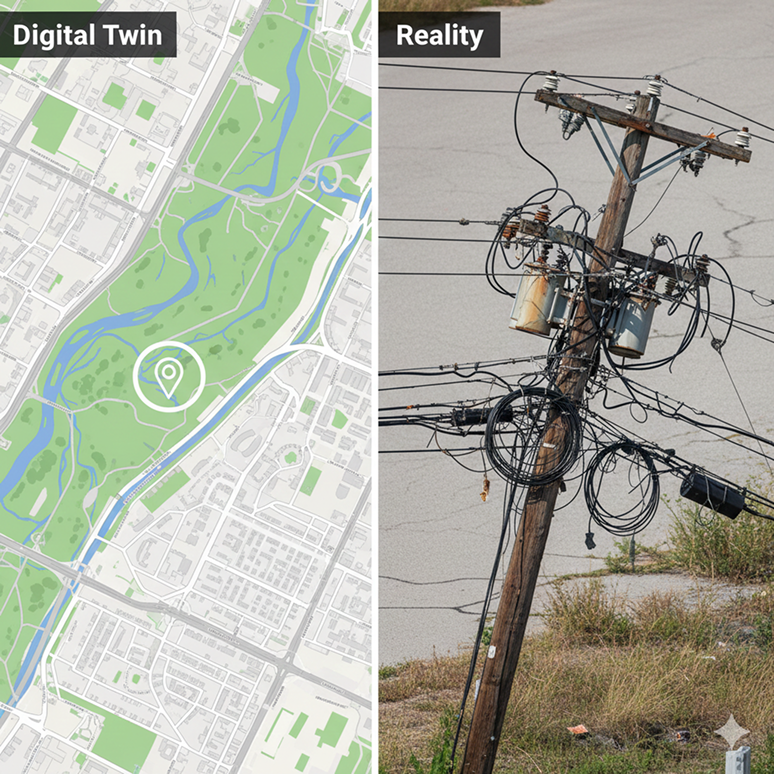
Specifically, precision OSP engineering for broadband deployment requires a “Digital Twin” approach. Using Geographic Information Systems (GIS), engineers layer right-of-way data, environmental restrictions, and existing utility assets into a living database. Research suggests that GIS-based strategies optimize routes and predict obstacles before a crew ever arrives on site.
Digital Twin vs. Reality: High-quality OSP engineering for broadband deployment turns chaotic field infrastructure into precise, actionable data.
Scale Faster with Mercury Z’s Scalable Engineering
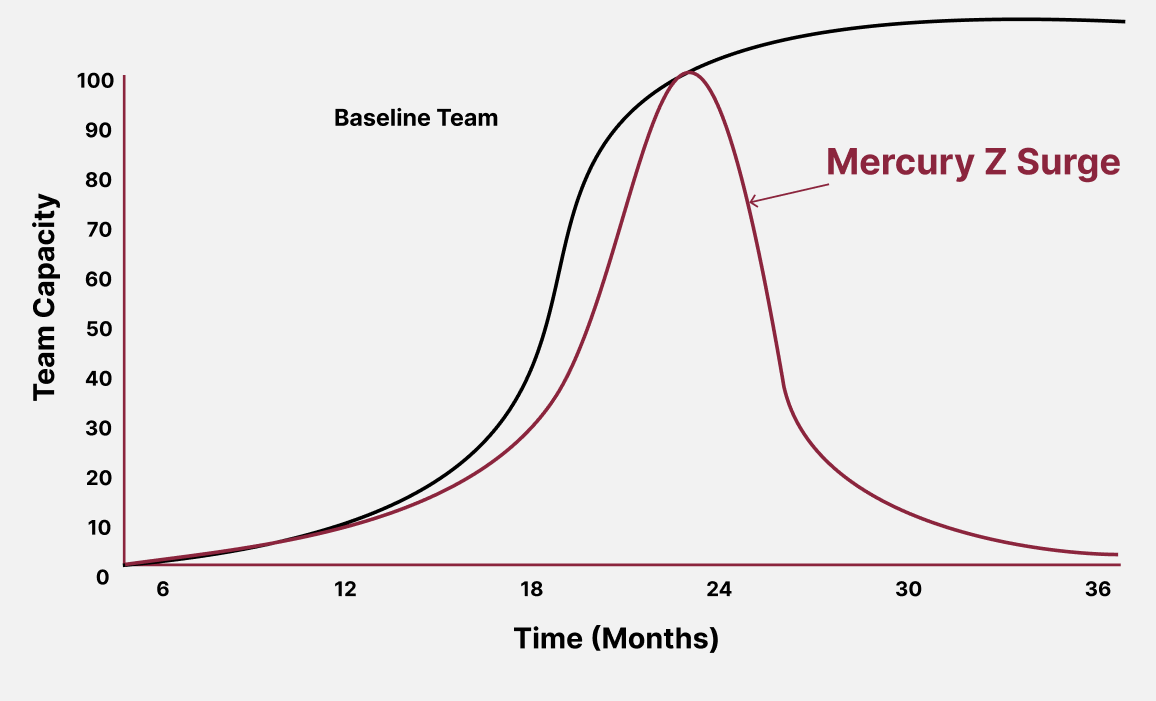
Most regional ISPs cannot justify a massive, permanent engineering staff for a two-year build. Therefore, Mercury Z provides “Scalable Engineering”—the surge capacity you need to handle the design phase without bloating long-term payroll.
- OSP & ISP Engineering: We design for constructability by accounting for soil, poles, and right-of-way before you commit capital.
- CAD & GIS Services: We transform field data into precision permits that meet the FCC’s pole attachment rules and municipal standards.
- Permitting Support: We manage the regulatory paperwork so your crews can keep moving.
FAQ: OSP Engineering for Broadband Deployment
What is OSP engineering in telecommunications? Outside Plant (OSP) engineering refers to the design and planning of all physical cabling and infrastructure located between the provider’s facility and the customer’s premises.
How does OSP engineering impact BEAD funding? BEAD funding requires strict adherence to timelines. Precise engineering prevents cost overruns and ensures permits are approved on the first submission, keeping the project in compliance with NTIA requirements.
What are make-ready costs? These are expenses associated with repairing or replacing utility poles to ensure they can safely support new fiber attachments.
The Bottom Line
You cannot plow your way out of a bad design. Every dollar spent on precision engineering today saves ten dollars in change orders tomorrow. As you prepare to activate your grant funding, ensure your network relies on accurate data rather than hopeful assumptions.
Is your Engineering Team ready for the Surge?
Mercury Z offers a Network Design & Permitting Assessment to identify potential bottlenecks before you mobilize.